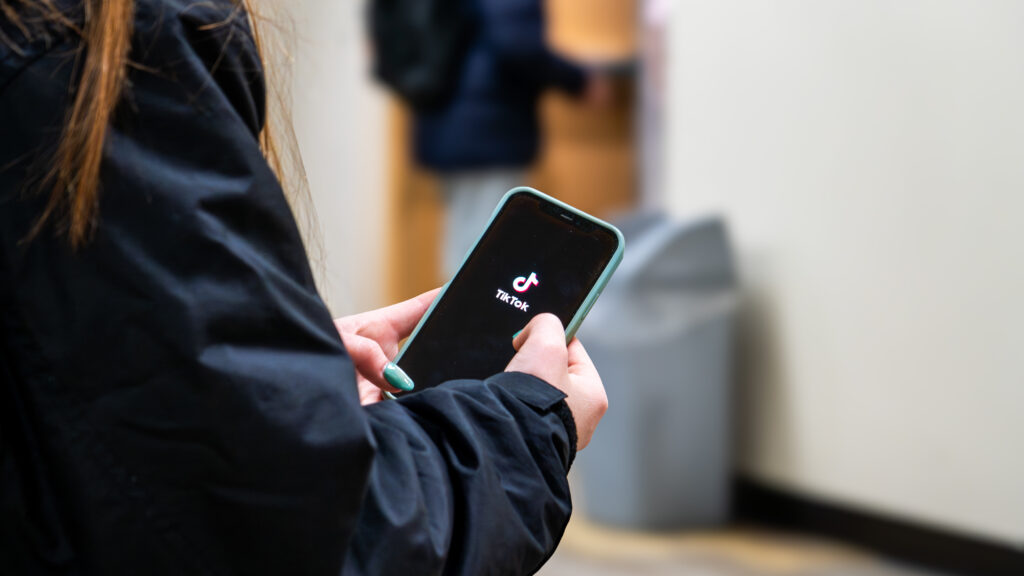
TikTok is everywhere on campus. It’s where students get news, find trends, procrastinate homework and sometimes, even make money. But if you’ve tried opening the app on University of Idaho Wi-Fi, you already know it won’t load. That’s not a tech issue; it’s the law.
TikTok is now co-owned by a U.S. company and its original Chinese parent company, ByteDance. Supporters claim this makes the app safer and solves national security concerns. But to me, this feels more like a loophole than a real solution.
ByteDance still owns part of the company and keeps control over TikTok’s algorithm for the system that decides what content we see and what goes viral. That means the core concerns haven’t actually disappeared.
Here in Idaho, TikTok is blocked on public university networks because of Idaho Code 18-6726, which bans the app on state-owned devices and networks. The law specifically targets TikTok due to its ties to ByteDance and concerns about foreign influence and data security. Whether you think that’s overkill or not, it’s the reason students can’t scroll on campus Wi-Fi.
University officials say they don’t have a choice. As Dan Ewart, vice president for information technology and chief information officer at UI, said, “TikTok is blocked on university networks and equipment per Idaho Law, specifically 18-6726. Until that law changes, TikTok will continue to be blocked on university networks and equipment.”
What’s frustrating is that TikTok’s new ownership structure is being sold as some kind of victory for U.S. users, but it doesn’t really address the heart of the issue. If ByteDance still has influence over the app’s technology, especially the algorithm, then what exactly changed? Slapping a U.S. company name on the front doesn’t magically make the risks disappear.
Some people argue that banning TikTok on campus networks limits free expression or access to information. But that ignores the bigger picture. Idaho’s law isn’t about silencing students; it’s about data security and protecting state systems from potential foreign interference. And honestly, when both state and federal governments agree that something is risky, it might be worth paying attention.
TikTok might be entertaining, but entertainment shouldn’t outweigh transparency and accountability. Until ownership is fully American or the company proves clearly that user data is protected from foreign access, skepticism is justified.
At UI, we’re stuck in the middle. We use TikTok constantly, but our own university can’t legally let us access it on campus networks. That contradiction shows just how messy this whole situation is. And until lawmakers or TikTok itself actually solve the problem instead of rebranding it, students will keep feeling like this deal is more spinning than substance.
AJ Pearman can be reached at [email protected].