When the University of Idaho dissolved its Diversity, Equity and Inclusion programs, in compliance with state law, there became a support gap for minority communities on campus.
In its place, UI’s Multicultural Greek Council has stepped up to provide support and structure for students that was previously offered through university DEI programs.
Cesar Sandoval, President of Omega Delta Phi, a multicultural fraternity, said the College Assistant Migrant Program was a helpful guide to university and a support system for him as a freshman, but CAMP also closed in 2025 amid national and state pushback against DEI.
“We try to be there for the community and try to build a pillar for students of color, especially Hispanic students of color, now with the state getting rid of DEI and not having a CAMP program,” said Kassandra Ortiz, president of Gamma Alpha Omega and Vice President of MGC.
Multicultural Greek was first established at UI in 1999 with the sisters of Gamma Alpha Omega, one year after National Multicultural Greek Council began in 1998. Since then, MGC has grown to include seven fraternities and sororities at UI.
Although Multicultural Greek and Mainstream Greek share similar practices like chapter, supporting philanthropies, networking and community service, what sets them apart is that culture is at the basis of what they do, according to MGC president Miguel Rios. Additionally, MGC does not have live in houses like other Greek organizations on campus.
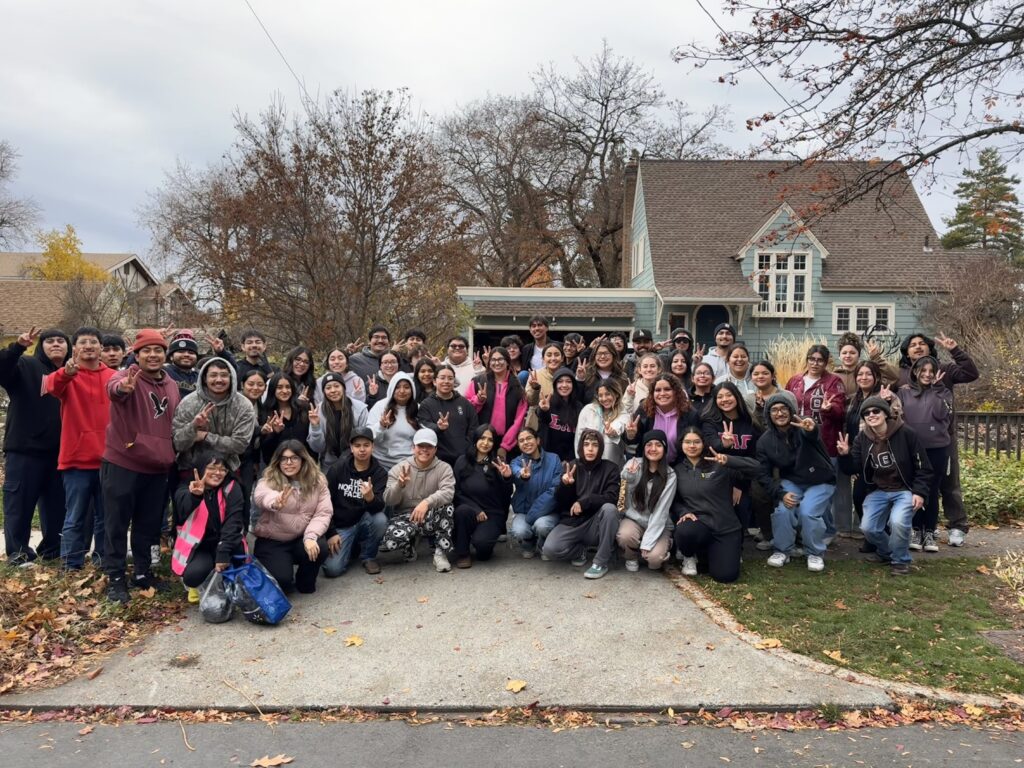
“The way that we organize supporting philanthropies or charitable organizations is more often revolving around physically serving the community,” said Eliot Wilson, president of Lambda Theta Phi. “We go out and rake community members’ yards in the fall. We make dog blankets to donate to the Humane Society. This keeps us directly connected to who we are serving, face to face.”
MGC provides support on campus by organizing events and initiatives that promote community for students. This year, MGC set up an ofrenda, a home alter popular in Mexican culture to celebrate the day of the dead, on the first floor of the library. They also collaborate with UI clubs like Campos which aim to continue the work of the CAMP program. For example, they put on an event for farmworker appreciation week and work with PODER of Idaho to help support families who are affected by ICE.
“MGC is an organization which is always thinking about others in all of their actions, ” said Erin Lasher, the Director of Fraternity and Sorority Life. “What I see in the MGC community is the values that these organizations place on integrity and character…they’re never not wearing their letters, they’re always so cognizant of how their individual actions represent their brothers and sisters.”
They also put on open informational events that Wilson said aim to improve the community. These events include Road to Responsibility: a DUI prevention talk, a toxic masculinity talk and help with Take Back the Night and These Hands Do Not Haze events.
Examples of organizations they fundraise for are: AIDS and HIV awareness (Gamma Alpha Omega), American Cancer Society (Kappa Delta Chi) and Wounded Warrior (Omega Delta Phi).
“It’s not just the hours; it’s the willingness and desire to connect with the community and give back. That is something I think MGC brings to the table,” said Lasher.
Although MGC is not exclusive to the Latinx community, Hispanic individuals make up the majority of the MGC at UI. Washington State University’s MGC, for example, has African American, Asian American, Pacific Islander and Latinx fraternities and sororities.
Emily Morales can be reached at [email protected].