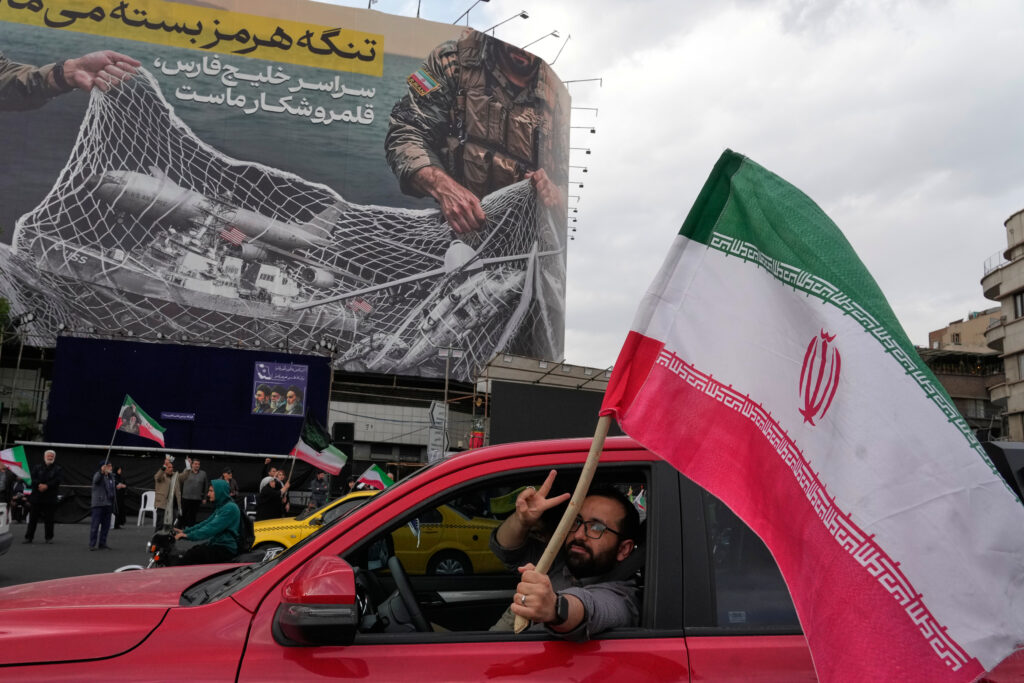
The United States’ decision to blockade Iranian ports in April 2026 represents a dramatic escalation in an already volatile conflict. While framed as a strategy to restore stability and force diplomatic concessions, the move highlights a deeper issue: military port blockades are often imprecise tools that risk creating more instability than they resolve.
The blockade, announced after failed negotiations between U.S. and Iranian officials, targets all ships entering or leaving Iranian ports according to an article by Reuters. This sweeping action is designed to cut off Iran’s oil exports and pressure its government economically. But history and current events suggest that such measures rarely remain contained.
At the center of this crisis is the Strait of Hormuz, one of the most strategically important waterways in the world. Roughly 20% of global oil supply moves through this narrow passage, making any disruption immediately felt across international markets from an article by Wikipedia
When the U.S. blockade took effect, it was expected to halt millions of barrels of Iranian oil per day, tightening supply and raising prices. That impact was almost immediate, with oil prices surging and global markets reacting to the uncertainty, according to an article by AP News. Supporters argue that the blockade is necessary. Iran had previously restricted access to the strait during the conflict, disrupting shipping and threatening global energy stability according to an article by Wikipedia. From this perspective, the U.S. action is meant to restore “freedom of navigation.” But there is an inherent contradiction in enforcing open access by restricting access. A blockade, by definition, limits movement — and in doing so, risks escalating tensions rather than easing them.
That escalation is not hypothetical. Iranian officials have already warned of retaliation, and U.S. leadership has responded with threats of military force against any interference according to an article by AP News.. This kind of rhetoric creates a fragile environment where a single miscalculation — a misidentified ship, a warning shot gone wrong — could trigger a wider regional conflict.
The international response also raises concerns. European leaders have emphasized the need to restore normal shipping through the strait, signaling unease with the blockade’s broader consequences according to an article by Reuters. At the same time, some U.S. allies have hesitated to fully support the operation, reflecting doubts about both its legality and its long-term effectiveness.
Economically, the blockade extends far beyond Iran. Countries that rely on Gulf oil — including major economies in Asia — are already feeling the effects. Disruptions in shipping routes have led to delays, increased costs and uncertainty in global supply chains. Even major shipping companies have expressed hesitation about operating in the region due to safety concerns according to an article by Reuters.

Perhaps most troubling is the humanitarian dimension. While blockades are often justified as targeting governments, their real-world impact tends to fall on civilians. Limiting trade can restrict access to essential goods like food, medicine and fuel, especially when shipping companies avoid high-risk areas altogether. Even when exemptions exist, fear and logistical challenges can still choke supply lines.
There is also the issue of effectiveness. Early reports suggest that not all ships are being deterred, raising questions about how enforceable the blockade truly is. Maintaining such an operation requires significant military resources and constant oversight, with no clear timeline for success.
None of this is to suggest that the United States should ignore threats to global shipping or regional security. Iran’s actions in restricting the strait have contributed significantly to the crisis. But a full-scale blockade is a maximalist response — one that leaves little room for gradual de-escalation or compromise.
Diplomacy, targeted sanctions and multilateral cooperation may be slower and less dramatic, but they offer more sustainable paths forward. A blockade, by contrast, risks locking both sides into a cycle of escalation that becomes increasingly difficult to control.
In the end, the question is not whether the U.S. can enforce a blockade. It is whether the global costs — economic, political and human — outweigh the intended benefits. In a region as critical as the Persian Gulf, the answer may determine far more than the outcome of a single conflict.
AJ Pearman can be reached at [email protected].
David Wells
Well written but SO SHORTSIGHTED perspective! "No boots on the ground," but raising the options for free-thinking to get their act together. This is NOT a "forever war" but it is critical to check the worst bullies in the world and to point to a larger peace in the Middle East. This opinion is just partisan!