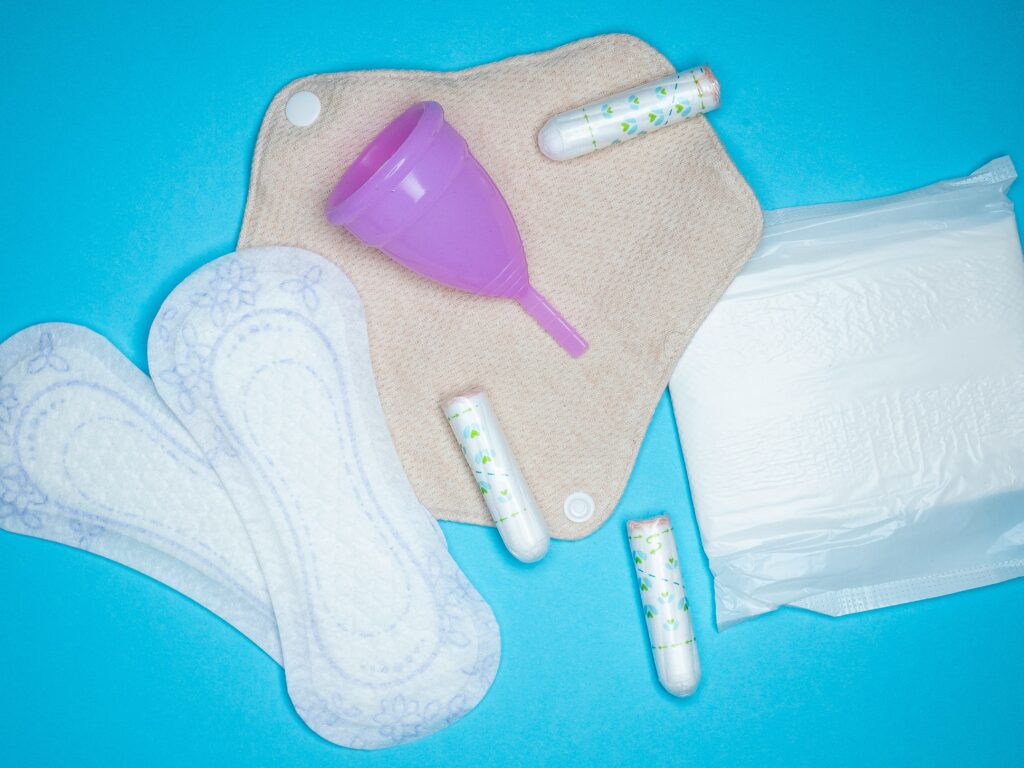
Every month, hundreds of millions of girls and women face a crisis that rarely makes headlines: how to manage a natural biological process without the basic supplies needed to do so safely and with dignity.
Period poverty — the lack of access to menstrual products, sanitation facilities and education — remains a global problem that cuts across income levels, cultures and continents.
Recent research from Dignity Grows underscores how widespread the issue has become, even in wealthy nations. National studies released through its Period Poverty Institute of America found that more than one-third of American women and girls cannot consistently afford period products, a reality that contributes to missed school, lost wages and health risks. Jennifer Tolman, president and CEO of Dignity Grows, argues that the crisis is often misunderstood.
“Period poverty transcends the traditional definition of ‘poverty’ because it can affect women who may typically be considered financially stable yet still struggle to consistently afford menstrual hygiene products,” Tolman said. “According to the latest data, 41.9% of American women have experienced difficulty accessing period products due to financial constraints.”
That statistic challenges the assumption that period poverty affects only those living below the poverty line. Rising costs of housing, food and healthcare mean many families who appear financially secure still face difficult trade-offs.
Globally, the consequences can be even more severe. An estimated 500 million women and girls worldwide lack adequate access to menstrual products and sanitation, according to an article by Global Health Economics. In many regions, girls miss school during menstruation because supplies are unavailable or facilities are unsafe, reinforcing cycles of educational inequality.
Tolman says the issue reveals a deeper disconnect between income statistics and everyday reality.
“Period poverty exposes the gap between income level and lived experience,” she said. “We see how deeply opportunity can be compromised when basic needs aren’t met and a public health crisis is overlooked in conversations about economic security.”
Dignity Grows’ recent research also highlights how period poverty disrupts stability in tangible ways. Lack of supplies forces many women to stay home from school or work, undermining both educational attainment and economic independence.
“Period poverty interrupts education, employment, and other day-to-day routines that create stability for girls, women and entire families,” Tolman said. “Among women experiencing period poverty in 2025, 21% said it impacted their ability to attend or perform at school, and 42% reported it impacted their ability to attend or perform at work. The effects are also felt in deeply personal ways that can alter a woman’s sense of wellbeing. Last year, 57% of women facing period poverty reported a decline in their mental health and 22% felt negative impacts on their relationships with family, friends and partners.”
These findings reinforce what global health experts have long argued: period poverty is not merely a hygiene issue but a barrier to full participation in society.
Organizations worldwide are attempting to address the crisis through both direct aid and systemic change. Dignity Grows distributes hygiene supplies while also conducting research to shape policy responses.
“Dignity Grows’ mission is to end period poverty in the U.S. through a multifaceted approach that links direct product support with research, ongoing education, and national networks of cross-sector changemakers,” Tolman said. “We invest in rigorous data collection to better understand the scope of period poverty while developing tools that address this issue at its roots, in homes in every American community.”
Some governments have begun taking action. Scotland, for example, guarantees free period products nationwide, while other countries are removing taxes on menstrual supplies or funding distribution programs in schools and shelters. Yet these efforts remain uneven, leaving millions without reliable support.
Stigma continues to compound the problem. In many cultures, menstruation is still treated as taboo, discouraging open discussion and delaying policy action. Without public acknowledgment, the issue remains hidden despite its scale.
For Tolman, the urgency is personal as well as societal.
“For me, the work Dignity Grows is doing across the country is a true passion,” she said. “No woman or girl should have to plan her month around scarcity and fear. As a national community, we have the chance to eliminate period poverty and help move individuals, households, and whole communities toward stable futures.”
Ending period poverty will require more than charity. It demands recognizing menstrual health as essential — as fundamental as access to food, water or medicine. Until that shift occurs globally, millions will continue to navigate each month not with inconvenience, but with uncertainty.
A society cannot claim progress while half its population faces a preventable barrier simply for being human.
AJ Pearman can be reached at [email protected].