As the United States government shutdown stretches on, millions of Americans who rely on the Supplemental Nutrition Assistance Program — better known as SNAP — are facing uncertainty about where their next meal will come from. The program, which provides monthly grocery benefits to roughly 42 million people, has become a casualty of Washington’s gridlock.
SNAP is a federally funded program, and when Congress fails to pass appropriations, those funds can quickly run dry. The U.S. Department of Agriculture has warned that November payments could be delayed or reduced if the shutdown continues.
According to The Washington Post, “current contingency funds are insufficient to cover full November payments for nearly 42 million participants, increasing the risk of delays and cuts.”
The impact of this is immediate and devastating. Families across the country are preparing to stretch dwindling food supplies, skip meals or turn to community food banks for help. Many are already living paycheck to paycheck, and any disruption in SNAP benefits threatens to deepen food insecurity.
According to The Associated Press, two federal judges ruled nearly simultaneously on Friday that President Donald Trump’s administration must continue to pay for SNAP, the nation’s biggest food aid program, using emergency reserve funds during the government shutdown. , but even those reserves may not last long. The USDA confirmed that while limited payments could continue temporarily, there is guarantee beyond the short term.
In the face of this uncertainty, neighborhoods and local organizations are stepping up in remarkable ways. Across the country, communities are setting up makeshift food banks, front-yard pantries, and volunteer drives to help neighbors weather the delay.
In Texas and Missouri, residents have launched community-led food drives as demand surges in local pantries. According to ABC News, there has been an increase in people using food banks. There are concerns that they may run out of supplies in a couple weeks if there is no further assistance. Volunteers report that families who have never needed help before are now seeking assistance for basic groceries like milk, eggs and bread.

Meanwhile, according to Underscore Native News, faith-based and tribal organizations and nonprofits are coordinating efforts to distribute nonperishable goods to those at risk of missing their SNAP deposits. These local initiatives have become a lifeline, but they are straining under the weight of federal inaction.
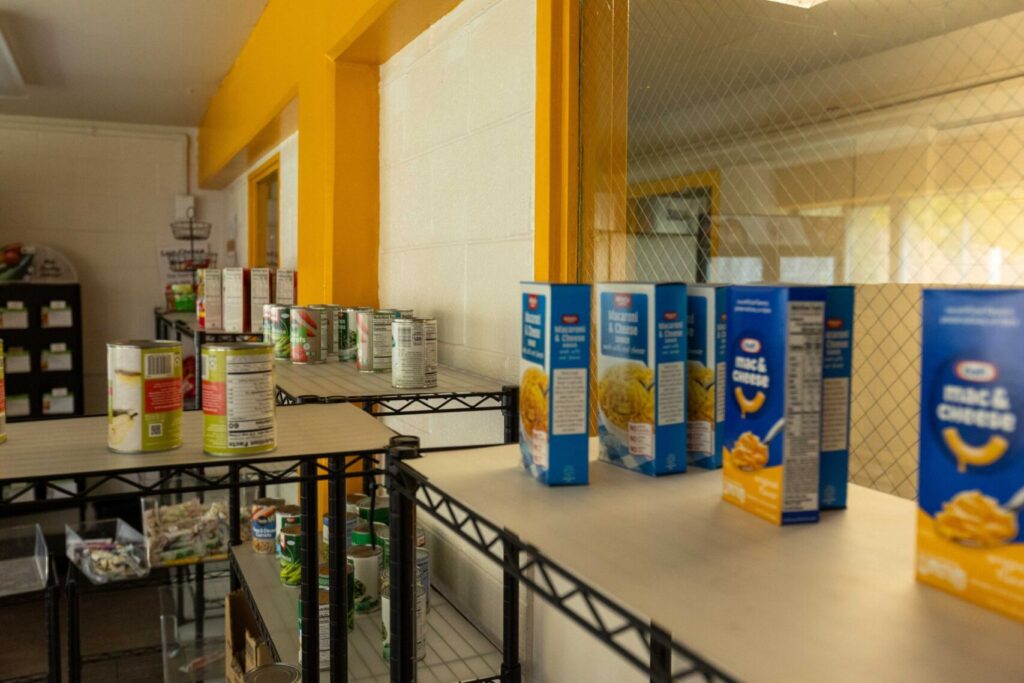
NPR reported that food banks, such as the Boston Neighborhood Opportunity Center Food Pantry, have seen an increase in requests for assistance in just two weeks. Volunteers are working overtime, but donations can’t fully replace the billions in federal aid normally distributed through SNAP.
This crisis highlights a hard truth about the American safety net: it is only as strong as the political will to fund it. According to Reuters, “the Supreme Court of the United States paused a judge-ordered full funding for SNAP in the context of the government shutdown, underscoring the uncertainty for benefit disbursements.”
That uncertainty has left millions of families anxious and frustrated. For many, SNAP isn’t a handout; it’s a bridge to stability, a safeguard that ensures children, seniors and working parents have enough to eat. When that bridge cracks, it’s the most vulnerable who falls first.
The generosity of neighbors and the quick mobilization of food banks prove that communities are resilient. But they shouldn’t bear this burden alone. The federal government must act swiftly to restore confidence in the safety net it promised to uphold.
As inspiring as local efforts are, they are no substitute for a functioning federal nutrition program. Americans shouldn’t have to rely on church pantries and front-yard food boxes to eat dinner. Until Washington resolves the shutdown, ordinary citizens will continue to fill the gap, a reminder that compassion runs deep in this country, but so does the cost of political stalemate.
AJ Pearman can be reached at [email protected].