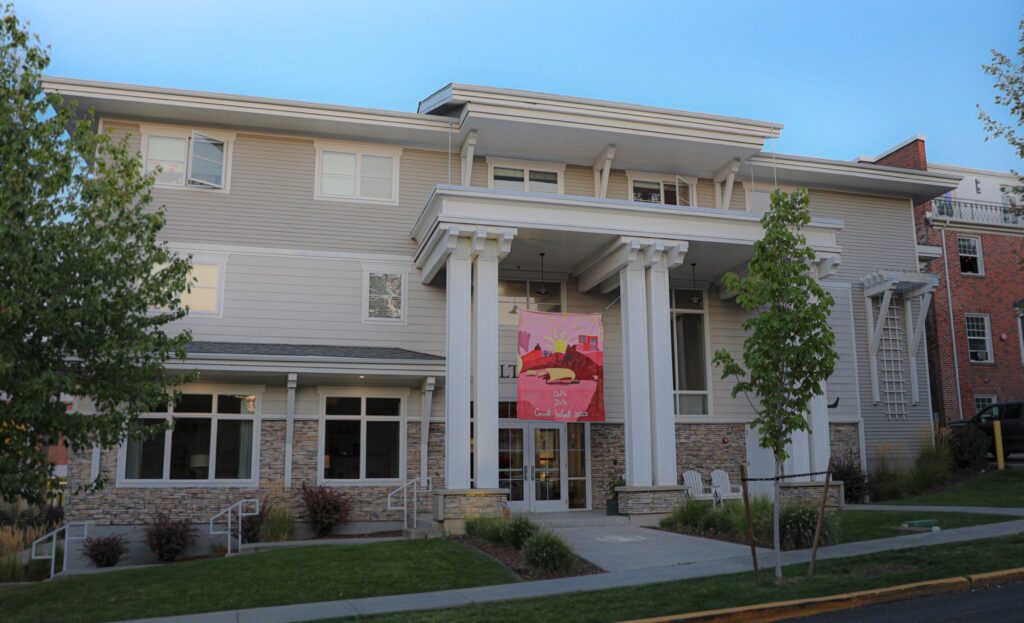
Last week was Greek Week on campus, where all the different fraternity and sorority chapters compete in events to earn points. However, not all the students on campus are involved in Greek life.
There is a definite disparity in how Greek Week is viewed between those in Greek life, and the rest of the students not in Greek life.
Carlos De Leon, a sophomore studying agriculture business and member of Pi Kappa Alpha, said in an interview with the Argonaut, “I think Greek Week is a great opportunity to try to reach out to a large portion of the college community, and to get all of the houses together to compete in something.”
One big way the houses build connections is through the volleyball tournament. Teams are composed of people from multiple houses, at least one fraternity and one sorority. The rounds draw people from all over Greek row, and towards the final rounds, you even end up rooting for teams that aren’t your own.
In contrast, Natalie Kessler, a senior studying economics who is not in Greek life, said, “I don’t really know what it is. I guess I just see the banners on people’s windows of the houses, and then that’s it. I follow one house on Instagram and so I see them repost some of the stuff, but I don’t really know anything about it.”
Without the integration of non-Greek students into Greek Week teams, it is harder for them to get connected into the Greek side of campus, especially when they have no idea of what’s even happening. The goal of Greek Week here at the University of Idaho is to raise money for the Vandal Healing Garden and food donations for the Vandal Food Pantry, and for the Greek houses to get involved with the Moscow community.
For all the good Greek Week may be doing for the community, if half the people on campus have no idea what is happening or why, there is going to be less total impact. When the campus is trying to support the Vandal Healing Garden and the Vandal Food Pantry, they should especially want to see as much engagement as possible.

There are also disparate views on how Greek Week supports the Moscow and UI communities.
De Leon also said in his interview, “One of the activities is supporting a local business so I would say yes, especially during Greek Week, the fraternity and sorority life are helping out the community by boosting the economy.”
Chapters are going and collaborating with businesses and donating food and money during Greek Week events.
Kessler also said when asked if Greek Week makes an impact, “I don’t, just as an outsider, I didn’t know that those things [Vandal Food Pantry and Vandal Healing Garden] were involved. I wouldn’t say so just because it’s not something I know of.”
The separation between Greek life and non-Greek life shows, that from an outside perspective, it does not seem like Greek Week is making that much of a difference. That is mostly because non-Greek students don’t know what events are happening or they aren’t seeing how many people show up. It is not something non-Greek life students are connected to.
De Leon had an idea to help. “One thing I would like to see is if we could possibly include more of the people who aren’t in Greek life by making a team for them to participate, even though they aren’t in a house,” he said.
If this idea was implemented to some extent, it would allow greater connection between the Greek and non-Greek sections of student life, as well as bringing more attention to the charitable work Greek Week advocates for. This could hopefully result in more donations for the Vandal Food Pantry and the Vandal Healing Garden.
Christopher Sprague can be reached at [email protected].