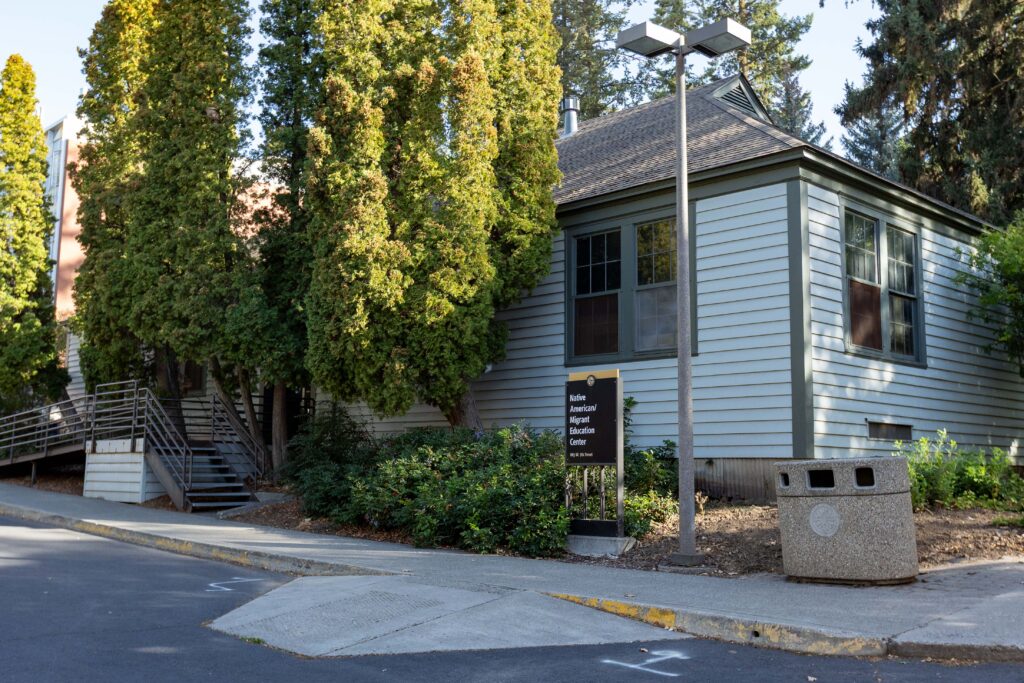
The university’s College Assistant Migrant Program was shut down after federal government cuts to funding on Sept. 15.
The U.S. Department of Education Office of Migrant Education officially notified CAMP that its five-year grant would not be renewed. The grant expired on June 30, with a grace period lasting up until Aug. 2. Typically, CAMP is notified in March whether its funding will be renewed for the next year.
CAMP staff and participants said they were devastated to hear the news of the program being defunded.
Evelina Arevalos, the director of CAMP at UI, said, “It’s hard to see the chapter close because it’s more than just a program; it’s a family.”
Over the decades, CAMP has provided an environment for its students to have support, family and a place to feel like they belonged.
Louie Cortez, a junior at UI and former CAMP student, said, “The program gave me a place to call home…now I worry that future students won’t have the same support, encouragement or community.”
Students who were in the program prior to the shutdown have expressed a need for a formal group or organization to keep the support going. Students are planning to restart the CAMP Organization of Students that ran from 2000-2014, according to UI-CAMP’s Instagram page. This would allow them to keep the sense of community between fellow students who come from migrant farmworking backgrounds.
CAMP was nationally established in 1972 and established on the UI campus in fall of 1999 to help first-year college students from migrant farmworking backgrounds pursue a higher education. Programs like CAMP often provide a sense of security for students and provide services such as tutoring, academic skill building and health services.
Also defunded was the High School Equivalency Program, which helps migratory and seasonal farmworkers and their family members obtain the equivalent of a high school diploma.
These programs can be life-changing, National HEP-CAMP Association President Greg Contreras told KTVB.
“These students are hungry for education, and [the] programs are effective, and … we’re, in a way, dismissing potential graduates from institutions of higher education who could be leaders in our community, serving our communities. So, it’s a huge loss to be on the verge of not having these programs,” Contreras said to KTVB.
CAMP helped bridge the financial gap many migrant farmworkers see and offered students a sense of family and belonging, an experience that left an impact on those parts of the program. Despite CAMP itself no longer being a part of UI, similar programs such as Vandals First and TRIO are available to assist students.
Anna Capello and Emily Morales can be reached at [email protected].