
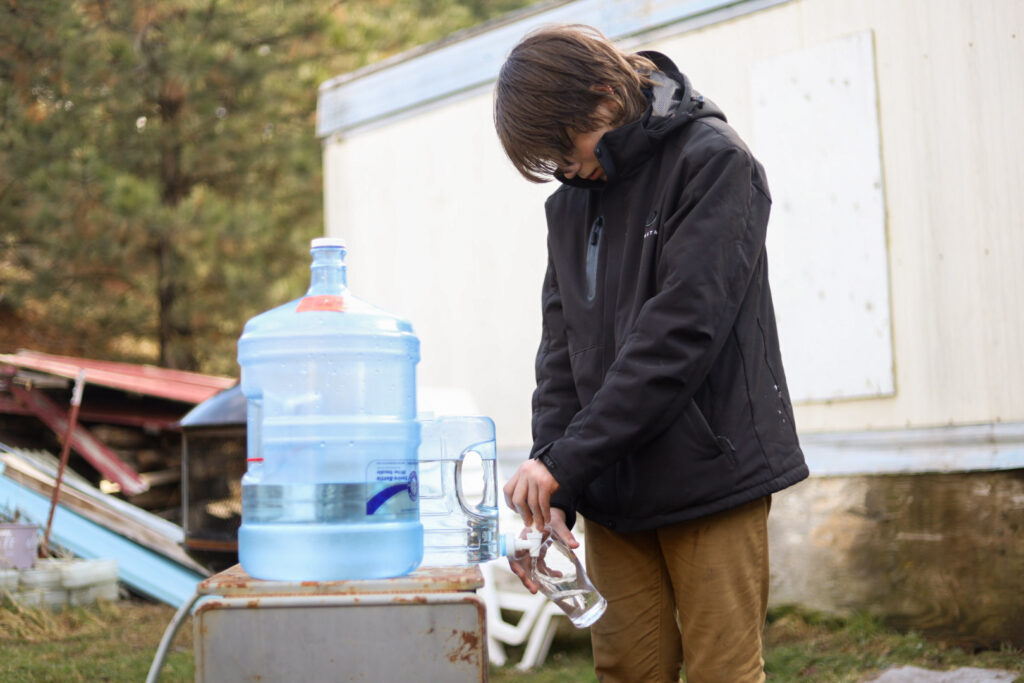
After an unsustainable sewer system and a period of water inaccessibility, the lives of many in Appaloosa Court have been affected. New management under Gary Lester, who acquired the park in October, brings progress after a period of hardship.
Appaloosa Court is a trailer park located on the outskirts of Moscow, just off of the University of Idaho’s campus. With about 60 homes located at the bottom of a steep road, the community has been seeing issues with a lack of access to clean water and sewage sometimes visibly bubbling up in areas of the park.
With a restored well and plans for the park’s sewage to be connected to the City of Moscow, the water troubles that have affected the tenants of Appaloosa Court appear to finally be on the way out.
Though these issues were obvious to the tenants who were impacted, one resident expressed concern about what levying complaints would mean for the continued survival of both the tenants and the park.
“There’s a good amount of us here who own our trailers like I do,” resident Crystal Hennington said. “It’s like self-preservation. Don’t make the big man mad, don’t take it away.”
While Rusty Olps, the previous owner of the park, said he saw little complaint during this period, he acknowledged that the grounds for grievance were there.
“I received very few complaints,” Olps said. “It would have been very reasonable for them to complain about the water being on and off so much.”
Since buying the park in 2017, Olps said the park’s water system had few problems to speak of, outside of replacing a pump on occasion.
“Last year was the first time we really had a supply issue,” Olps said. “I thought it was mostly just the record-breaking drought.”
Olps said he believed that the patience of the residents during this period stemmed from them seeing either himself, a park manager or a water operator frequenting the park whenever issues arose.
“We were always in the process of fixing it or having it fixed, and then failing again,” Olps said. “It was just that it happened a lot.”
The frequency of these issues would come to bear a significant impact on how residents lived.
Henington said that a variety of limitations had been placed on water usage, including showers of five minutes or less, in addition to outages where water was inaccessible for extended periods of time. Even when water was accessible, the quality could be severely lacking. Henington added that her washer and dryer were rendered virtually unusable because of the water quality.
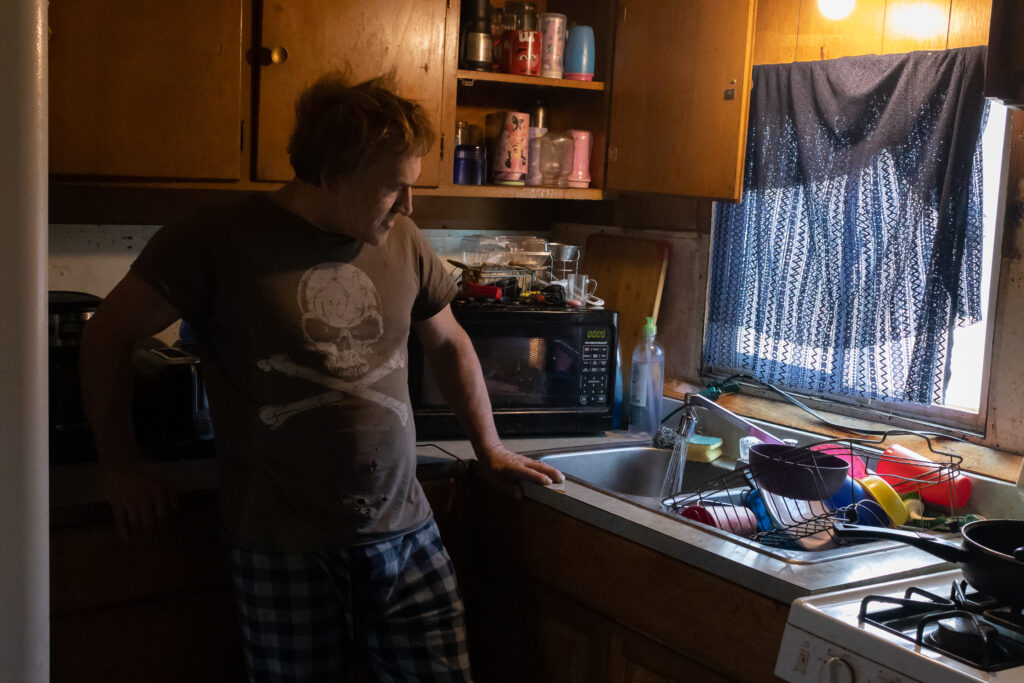
“There were times when they’re like ‘oh it’s all clear, go and use the water, go turn it on,’ and you have mud spitting out in the washing machine,” Henington said. “How good is that?”
The issue of water access had an added degree of complexity for those within the park who were trying to manage both the water outages and their families.
“How do you explain to a five-year-old you can’t flush the toilet because there’s no water?” resident Crystal Riggs asked. “How do you explain to a five-year-old, who’s super thirsty, that she can’t get a drink of water out of the faucet?”
Throughout the duration of the park’s most recent water issues, co-founder of Food Not Bombs of the Palouse Olivia Moses has been at the forefront of the relief effort in Appaloosa, providing consistent aid to the tenants that have been affected by the park’s water crisis. For Moses, the issue of water access had become apparent in April after deliveries of aid to the park’s tenants had already been made for a few months.
“We initially had been referred to one household down there from another household that we serve outside the park,” Moses said. “One household turns to two and (all at) once you’re going door-to-door and everyone’s talking about the water issues. We felt like we had to start doing something a bit more proactive.”
Moses said that she has been assisting in providing milk, juice, water and a variety of food for the residents of Appaloosa Court.
In addition to the limited water access, the park was saddled with a sewage system that was no longer sustainable.
“The water issues were recent,” Olps said. “The real problem was the sewer system.”
A year after purchasing the park, Olps said he was contacted by the Idaho Department of Environmental Quality and notified that the current sewer system was illegal. For decades the park had pumped its sewage from a tank at the bottom of the park up to a lagoon at the top. As the park expanded, the lagoon was no longer big enough to hold the sewage before it was treated, resulting in sewage overflow across UI’s cattle pasture.
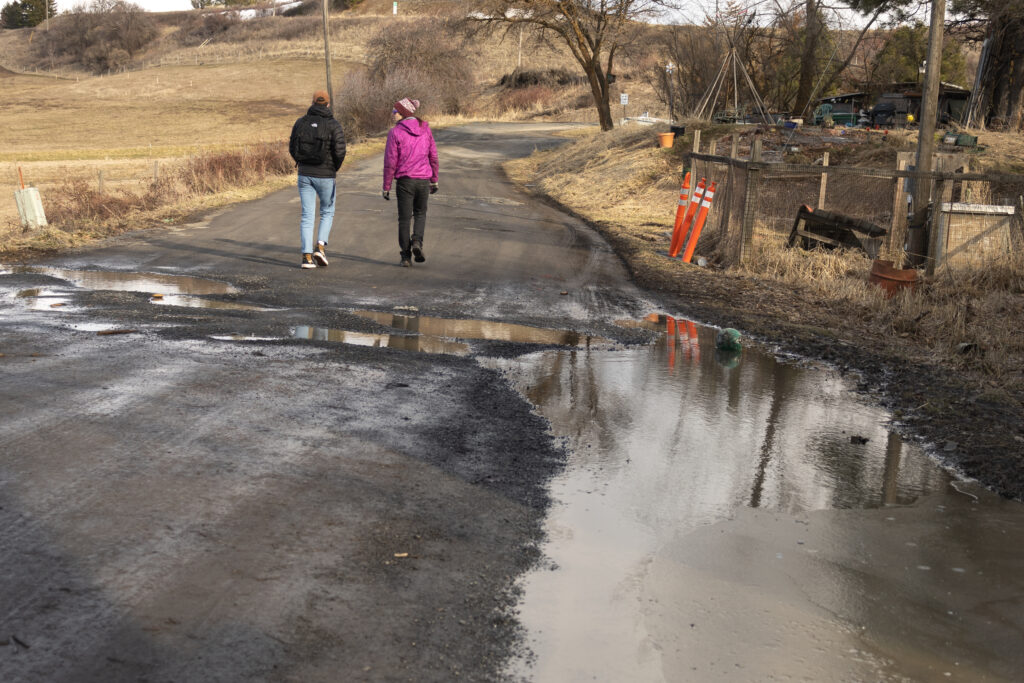
The effects of the sewage system’s limited capacity were felt within the park. Moses said that residents would report sewage bubbling up to the surface in certain areas of the park following flooding or snowstorms.
In 2017, a plan was drafted in coordination with Shaffers Engineering and Consulting to remedy sewage issues. The necessary costs, however, proved to be too high for Olps, and, in 2021, the park was in need of a new owner.
“(What) I couldn’t figure out was how to pay for the sewer system which was in the hundreds of thousands of dollars,” Olps said. “It was almost what the park was worth, so I was really stuck.”
Gary Lester, who had been approached as a potential buyer for the property previously, bought the park, this time armed with the necessary capital and experience to remedy the situation.
Lester said that his original motivation for being involved in the mobile home business was a means of diversifying his income stream.
“I didn’t have the cash to do commercial real estate, but you can get rental income very affordably by doing the mobile home site,” Lester said.
One of his prior endeavors was Moscow’s Abiel Mobile Home Community, a park Lester said was characterized by drug issues, overdue rent payments and a high percentage of vacancies.
“It was 44% vacant, and over the course of five years, I’ve got it at essentially 100% filled with affordable housing spaces,” Lester said.
Once Appaloosa needed new ownership once again, Lester was made aware of the magnitude of the projects that the park would need. With the turnaround that he saw at Abiel in mind, Lester began to think “OK, I can get this done.”
With the issues of water and sewage at the forefront upon taking over the park, the layout proved to be a unique challenge in and of itself.
Due to the layout of the park, homes were at varying elevations, meaning that each house was affected differently, with some having consistent access to clean drinking water and others being left in spaces with unclean water and recurring shortages. Though most have had some access to water, Moses said that there was one house in particular that lacked access since April.
Along with the varied elevation, water access has also been altered by the interconnected nature of the water infrastructure.
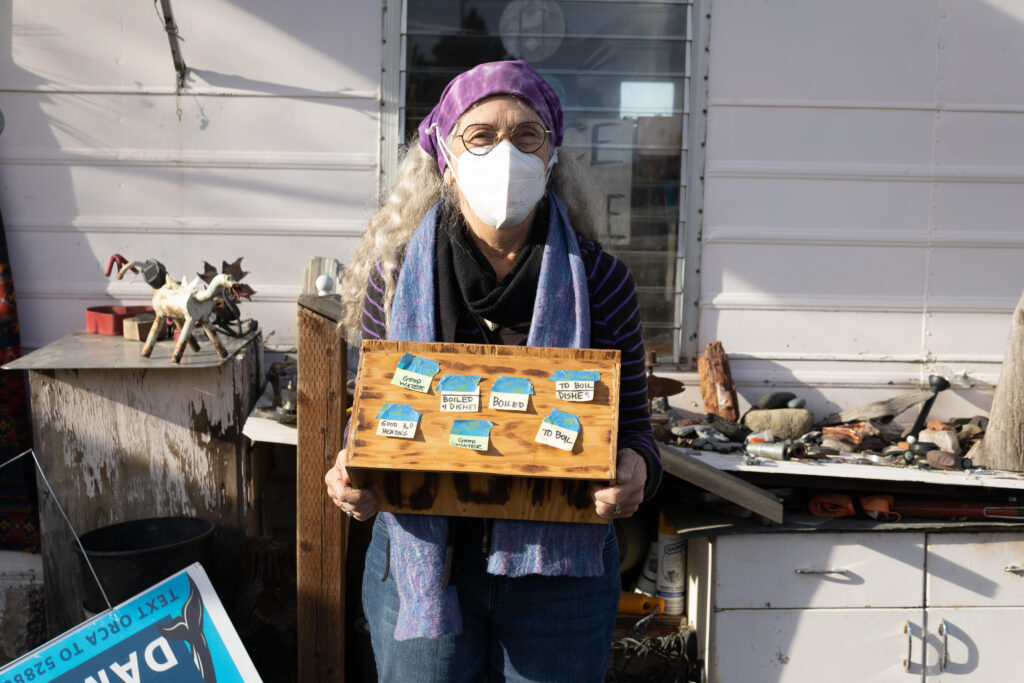
“These trailers are old and (if) one person down the road has a break, it affects the other people,” resident Miriam Kent said. “It’s like a little village, it’ll affect everybody in that world.”
Lester noted that this degree of interdependence and inefficiency was unlike anything he’d seen in a mobile home park.
“We’ve got to replace sections of the water system layout…The valves are just really weird, and I’ve never seen a park laid out (that) inherently causes inefficiencies,” Lester said, adding that he plans for these core infrastructure issues to be addressed and reconfigured in the coming years.
With the restoration of a well that had previously provided water to the park residents, Lester said the current expectation is that the issue of insufficient drinking water will finally be solved.
The park’s well was initially drilled in 1983, producing 60 gallons of water per minute at 405 feet deep. After conducting diagnostics on the well’s current standing, Lester found that the well’s depth had been reduced by 15 feet. While the depth of the well shrunk, a layer of sand had also filled the bottom 40 feet of the well, lowering its capacity even more.
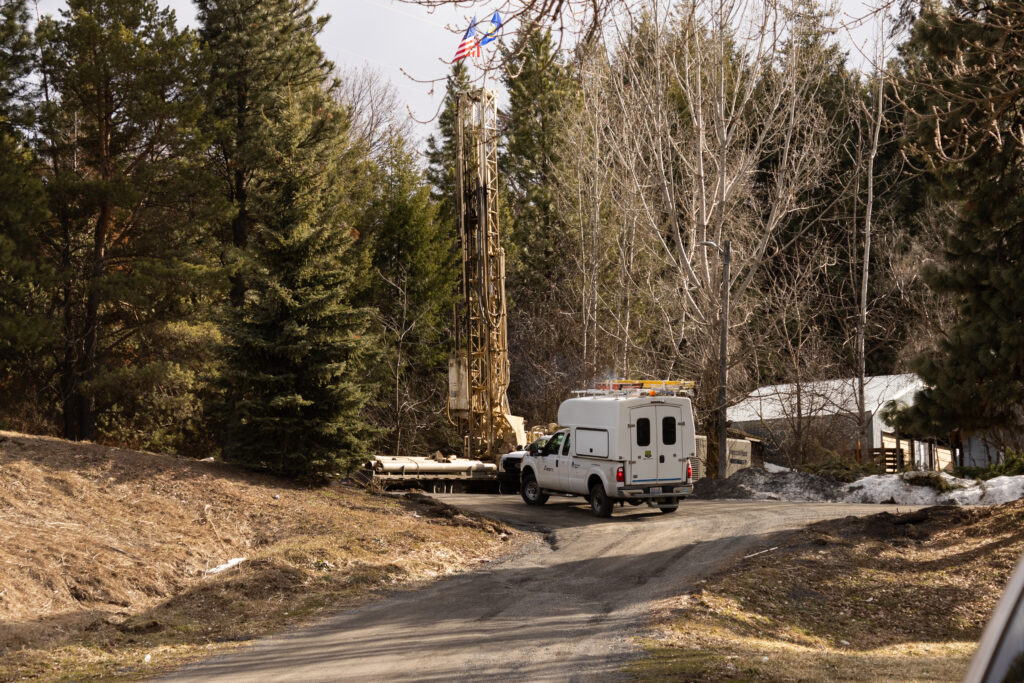
These factors brought the well’s production down from 60 gallons of water per minute to five gallons per minute, hardly enough for a park that houses more than 60 homes. After jetting and cleaning the well of the sand layer, tests showed the well could once again support a draw of 60 gallons a minute.
“I’m 99% positive that was the core problem,” Gary said. “It took 30 years to get to that condition, it’ll probably take another 30 years to do the same thing, so we should be on for a couple of decades of good water yields.”
Gary said that while this substantial increase in water yield would be enough to meet the needs of the homes in the park, there were additional problems that contributed to the water shortage.
The biggest of these problems was leaks in both the water coming into the reservoir as well as throughout the park’s water distribution system. This included pipes and valves in the ground, in addition to leaky faucets and running toilets in the tenant’s homes. To curb the leaks in the homes, Lester purchased a variety of water conservation kits for all the homes in the park including water-saving showerheads, water-saving aerators for sinks and dye tests to ensure that toilet tanks weren’t leaking.
With the drinking water addressed, the wastewater sits next on the list of priorities for the park.
The plan to connect the court’s wastewater to the City of Moscow was in place under the previous owner, with an anticipated completion date of Jan. 31. Due to weather delays and supply chain issues, the current expectation is that the sewage will be rerouted between May and June.
As the park’s current wastewater sits in a lagoon, Lester said that, once the city is connected, the lagoon would need to be drained into the wider wastewater system and the remaining sludge would need to be excavated and sent to the county landfill.
One of the remaining issues has been financial, with some residents concerned about how the infrastructure expenses will be borne by the community, a number of whom are disabled or living off social security.
Since the park is located just outside of the city limits, the fee for Appaloosa connecting to Moscow’s sewage line is twice that of communities within the city.
Lester said that the one-time fee to connect the park to the city sewage comes in at $140,000. The park will then have additional charges for each home every month on top of this fee that will be passed on to tenants.
As of now, Lester said he is bearing the burden of some of the infrastructure, giving tenants a timeline for the rent increases and a buffer to adjust accordingly.
Despite the work still to be done under Lester, including towing vehicles, clearing trash and grading the roads, the park has finally restored what is perhaps the most necessary— drinking water for a community that has gone without reliable access for months on end.
“I want to avoid that Syringa situation,” Lester said, in reference to another Moscow mobile home park that closed after neglect. “I want this to be a success for everybody, I want the tenants to feel like they are being served properly.”
Royce McCandless can be reached at [email protected] or Twitter @roycemccandless
Robert Mueller
Ha! Subway's "Legend of the Pit" here, the double-impeacher. The most publicized person in world history. The all-but-homeless working man, who refused SS-I benefits in 1988 to work as a $4.85/hour janitor and full-time student and had no contraband whatsoever during the despicable media terrorism of 2003 and not so much as a misdemeanor on his record? ("Oh ... that's why they were booed, jeered, and nearly criminally indicted in 2016!")