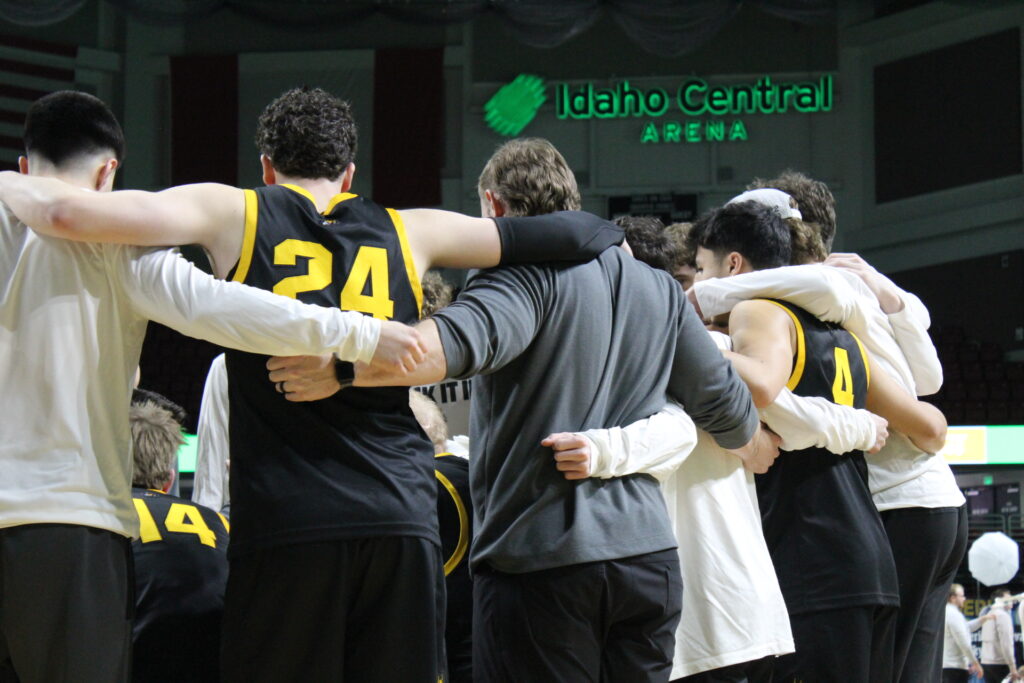
For much of the winter, the Idaho Vandals (21-15, 9-9) looked like a team still searching for itself. By March, they had become something else entirely.
What began as an inconsistent season filled with missed opportunities ended with one of the most remarkable runs in program history, as Idaho captured the Big Sky Conference title and returned to the NCAA Tournament for the first time since 1990.
The Vandals finished the 2025-26 campaign with a 21-15 record, the most wins of any team in the Big Sky Conference, and reached the NCAA Tournament as a no. 15 seed in the South Region. It marked the program’s fifth appearance in March Madness and capped a season that, while far from perfect, ultimately reshaped expectations for Idaho basketball.
The path to that moment was anything but linear.
From the start, Idaho was never defined by one dominant scorer. Instead, the Vandals relied on depth and a willingness to share the ball.
No player finished in the top 10 in the conference in scoring, yet four Vandals — Kolton Mitchell, Jackson Rasmussen, Biko Johnson and Isaiah Brickner — all ranked among the top 20. Together, they accounted for nearly 64% of the team’s scoring production.
Mitchell led the way, averaging 13.7 points, 3.8 assists and 1.2 steals per game, earning All-Big Sky honorable mention honors. Despite missing time late in the season with two broken ribs, he remained one of the conference’s most reliable perimeter threats, finishing among the top four in made three-pointers.

Rasmussen, a freshman forward, quickly established himself as one of the league’s most impactful newcomers. He averaged 13.6 points and 4.7 rebounds per game while shooting 48.6 percent from the field, good for fifth in the conference. His production earned him Big Sky Freshman of the Year honors and provided Idaho with a consistent physical presence on the interior throughout the season.
Johnson contributed across the board, averaging 12.3 points, 3.8 rebounds and 2.4 assists per game, while Brickner emerged as one of the conference’s most efficient scorers down the stretch. After beginning the year in a reserve role, Brickner elevated his play in the second half of the season and finished with 11.9 points and 3.9 rebounds per game, earning Big Sky Sixth Man of the Year recognition.
The Vandals’ offensive success was rooted in spacing and shot distribution. Idaho led the Big Sky in total three-pointers made for the second consecutive season, finishing with 355 — a new program record that shattered last year’s mark of 308.
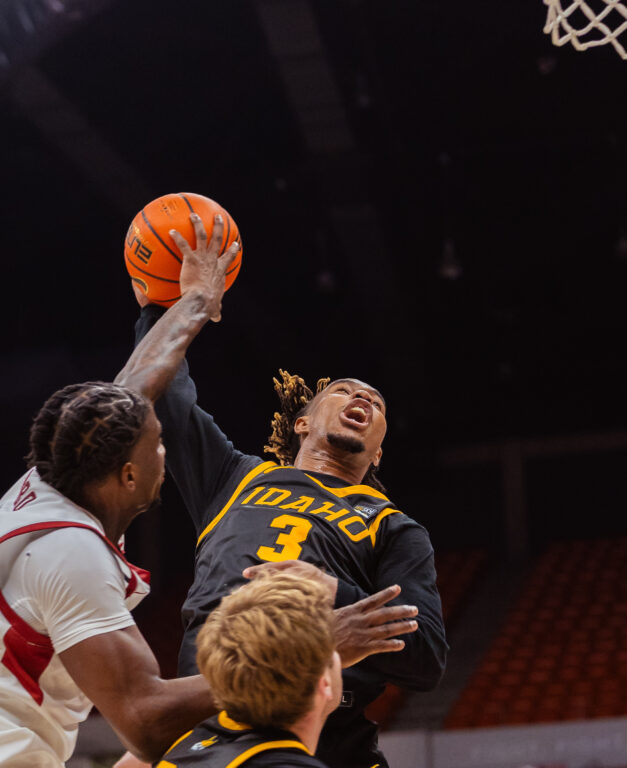
At the same time, the Vandals’ size and rebounding presence allowed them to create second-chance opportunities that offset inefficiencies elsewhere.
The Vandals finished with the second-lowest field goal percentage in the conference, often struggling to convert consistent looks inside the arc. That weakness was balanced by two defining strengths: three-point volume and rebounding dominance.
Idaho led the Big Sky in total rebounds by a wide margin, regularly controlling the glass on both ends of the floor. That advantage, combined with their perimeter shooting, allowed the Vandals to generate extra possessions and remain competitive even during poor shooting nights.
Defensively, Idaho quietly put together one of the strongest seasons in the conference. The Vandals finished third in the Big Sky in both points allowed per game and opponent field goal percentage, establishing themselves as a disciplined and physical defensive unit.
When paired with their offensive balance, it created a team capable of competing with anyone in the conference.
For much of the regular season, Idaho struggled to put together complete performances.
The Vandals often paired strong stretches of play with extended scoring droughts, especially in conference play. Games were frequently decided by runs, with Idaho capable of building leads or falling behind in short bursts.
That inconsistency ultimately cost the Vandals a higher seed in the Big Sky Tournament. Idaho entered the tournament as the no. 7 seed, a position that left little margin for error.
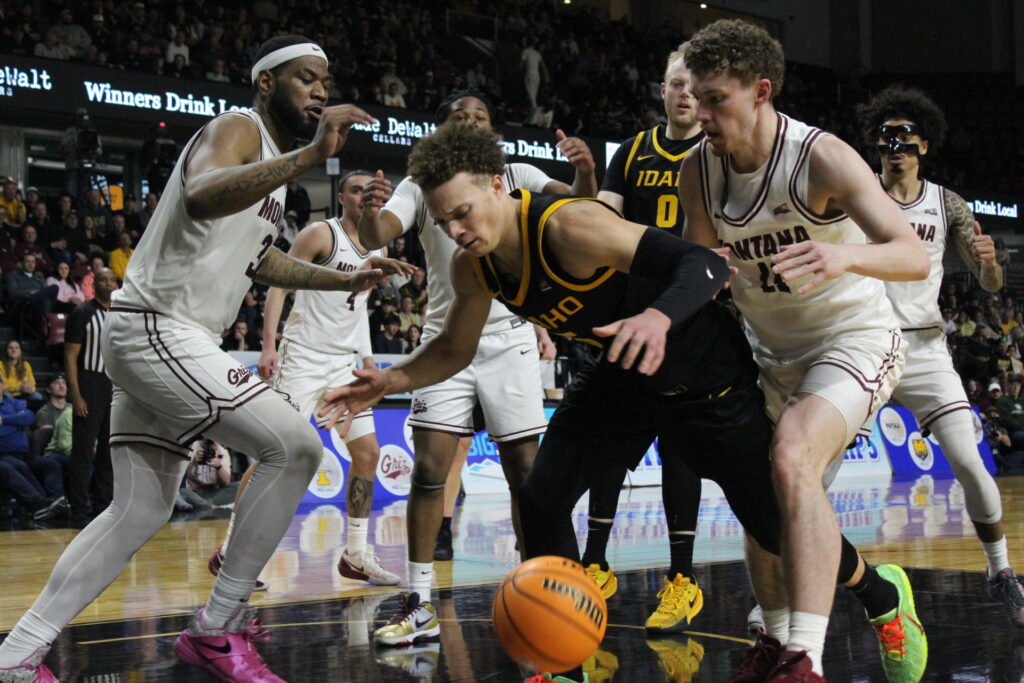
To win the conference title, the Vandals would need to do something no team had done before: win four games in five days.
Idaho opened the Big Sky Tournament with a dominant defensive performance against Sacramento State, holding the Hornets to just 13 points in the first half in a 68-45 victory.
From there, the Vandals carried that momentum into a quarterfinal matchup with second-seeded Montana State. In a tightly contested game, Idaho relied on its physicality and depth to secure a 78-74 win and advance to the semifinals.
The Vandals’ identity became clearer with each game. They controlled the glass. They limited turnovers. They played with confidence.
In the semifinals, Idaho faced Eastern Washington for the second time in eight days and delivered one of its most complete performances of the season. The Vandals shot efficiently, defended the three-point line and maintained control throughout an 81-68 victory to punch their ticket to the championship game.
The title game against Montana provided one final test. After losing twice to the Grizzlies during the regular season, Idaho delivered its most complete performance of the year. The Vandals dominated the rebounding battle, protected the basketball and controlled the game from start to finish in a 77-66 win.
With the victory, Idaho secured its fifth conference title and became the first team in Big Sky history to win four games in five days to claim the championship.
The reward for Idaho’s historic run was a matchup with second-seeded Houston in the NCAA Tournament.
The Cougars, one of the most complete teams in the country, proved to be a difficult challenge. Idaho fell 78-47 in the Round of 64, closing the season against a program that entered the tournament as a national contender.
While the result did not go in Idaho’s favor, the experience marked a significant step forward for the program. The Vandals’ appearance in the tournament, combined with their conference title, represented a level of success not seen in Moscow in decades.
Idaho reached a program-best NET ranking of 130 during the season, further reflecting its rise on the national stage.
Under head coach Alex Pribble, Idaho has steadily built toward this moment. In three seasons, the program has progressed from rebuilding stages to conference champion, culminating in its first NCAA Tournament appearance in 36 years.
Pribble and the Idaho athletes were not made available for interviews at any point after the season.
The 2025-26 season changed expectations on the Palouse. The Vandals established a culture built on resilience and collective play. They demonstrated the ability to compete with top teams in their conference and, ultimately, to finish the job when it mattered most.
At the same time, the conclusion of the season brings significant change. Starters Brody Rowbury, Johnson and Brickner have used all their eligibility. Meanwhile four Vandal players have entered the transfer portal.
Rasmussen headlines the group along with Jack Payne, Trevon Blassingame and Ewan Steele. Along with those confirmed departures a rumor of Mitchell entering the portal as well leaves more questions heading into next season.
The roster that delivered one of the most memorable seasons in program history will look very different next year. Replacing that production will not be easy, but the foundation established in Pribble’s first three seasons remains.
The challenge now shifts from building to maintaining. The Vandals will enter next season with a target on their back, a new roster and a higher standard than ever before.