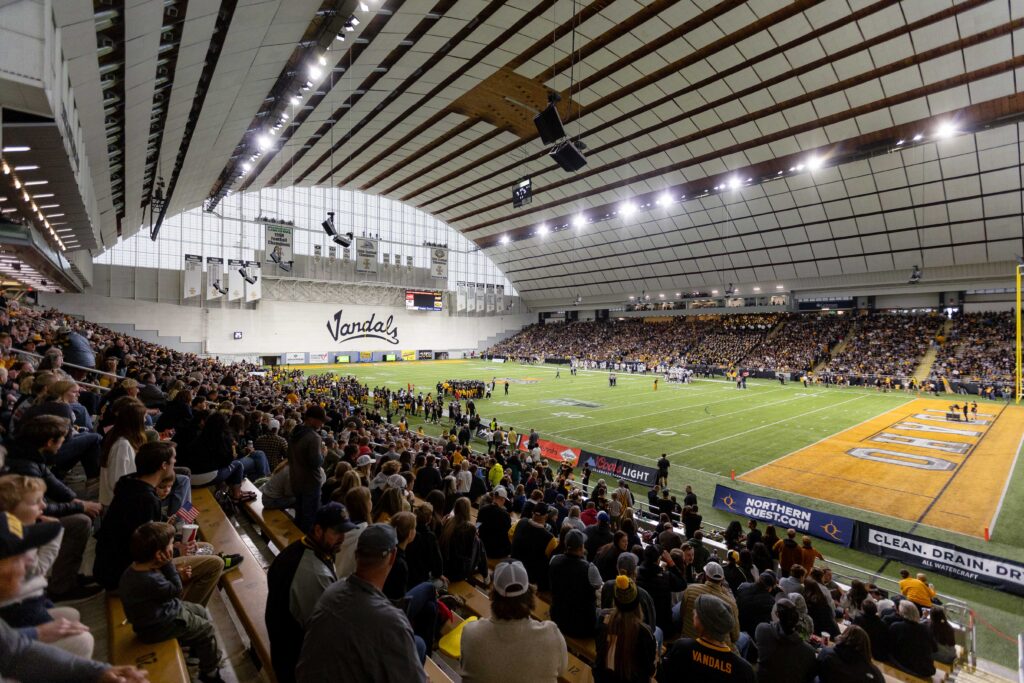
In the ever-changing world of college athletics, the ability to compensate athletes has risen to the top of the priority list, and the University of Idaho has joined six other Big Sky programs in deciding to opt into the NCAA House settlement, according to an email from athletic director Terry Gawlik obtained by The Argonaut.
“We continually look for ways to elevate our athletic programs. After much research, contemplation, and planning, we have made the decision to opt in for the 2026-27 academic year,” Gawlik said in the email. “As most people are aware, I do not make decisions like this without deeply exploring what it means for Idaho and how we can accomplish our goals with the best path forward. We will continue to offer the sports that we currently sponsor, ensuring that all our athletes have great experiences here at the University of Idaho.”
The House Settlement stems from the case House v. NCAA, filed in 2020, in which former college athletes, led by Arizona State swimmer Grant House and former Oregon and TCU women’s basketball player Sedona Prince, filed a class action lawsuit against the NCAA, arguing that restrictions on NIL and revenue sharing violated antitrust law.
Judge Claudia Wilken of the U.S. District Court for the Northern District of California oversaw the case and reached a conclusion that would reshape college athletics.
Under the settlement, the NCAA was ordered to pay $2.6 billion to athletes who competed between 2016 and 2024. Then, on June 5, 2025, Wilken approved a landmark rule change allowing schools to share up to 22% of their annual athletic revenue, up to approximately $20.5 million per year.
Schools were given the choice to opt in or out of the settlement, and last year UI chose to opt out. But after a season that highlighted the value of bringing in and more importantly retaining talent, the Vandals have reversed course. By opting in, Idaho gives itself a stronger opportunity to attract and keep players and ultimately compete for more championships.
“Coach [Alex] Pribble made a comment during our basketball season: ‘Built, not Bought,'” Gawlik said. “That stuck in my mind and really was true since we had not opted in and our teams were not able to offer funds above tuition, fees, room, board and in some cases cost of attendance. We want to sustain our recent successes. We want to attract and retain our best and brightest.”

Achieving that won’t come without difficult decisions. The added financial commitment could force the department to make hard choices about sports, athletes, scholarships, and program structure.
But in today’s college athletics landscape, competing at a high level requires bold moves, both on the field and in the athletic department. Opting into the House settlement gives Idaho the tool to do exactly that.
“To accomplish this, we will opt in, and our emphasis will be ‘Built to Last,'” Gawlik said. “We are going to invest in our athletes and our programs with continued support from the Vandal Scholarship Fund (VSF) for scholarships and events, we will be seeking funds for facility enhancements, and we will need dollars to provide opportunities to increase institutional brand awareness through our student-athlete impressions. How do we do that? By investing in our athletes when appropriate.”
Much remains uncertain heading into 2026 for Vandal Athletics, but this decision is a bold one and a defining step in the department’s future.