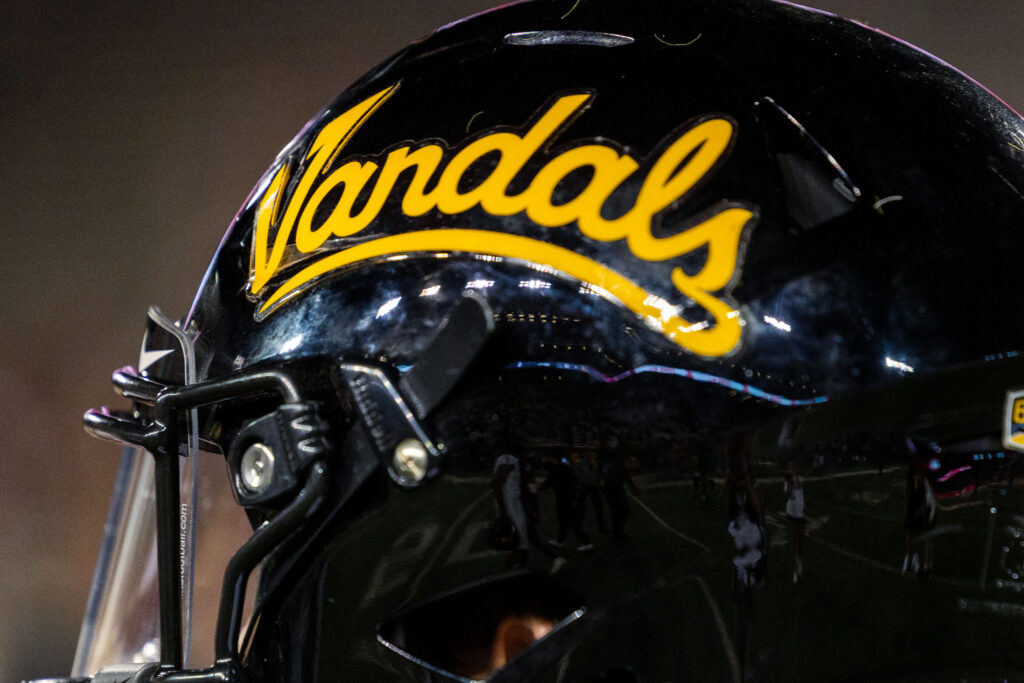
After a year defined by rebuilding, Idaho football enters the spring with something it did not have a season ago: continuity.
The Vandals kicked off their 2026 spring practices on March 31, beginning a five-week stretch of 14 sessions that will culminate in the annual Spring Game on May 1. Practices will be held three times per week, offering an early look at a program that appears further along in its development under second-year head coach Thomas Ford Jr.
“Really excited to get going with spring ball,” Ford said in an Idaho Athletics press release. “Our guys have done a great job this winter in the weight room.”
Spring football serves as the bridge between seasons. It is where position battles begin to take shape, schemes are installed and refined and returning players have a chance to take on larger roles. For Idaho, it also represents the next phase of a rebuild that showed flashes but lacked consistency in 2025.
The Vandals finished 4-8 last fall in Ford’s first season, navigating a roster overhaul that left them among the youngest teams in the Big Sky. Close losses and late-game struggles highlighted the growing pains of a group still learning how to win together.
“We have a much more experienced group than we did a year ago, especially on the offensive side of the ball,” Ford said. “A lot of our guys have now played 500-plus snaps as opposed to 200 or less.”
That added experience starts at quarterback with Joshua Wood, who emerged as one of the conference’s most dynamic dual-threat players despite missing time with injury. Wood returns after completing nearly 60%of his passes while averaging 59 rushing yards per game, providing Idaho with a proven option under center entering the spring.

He will not be alone in that room. Sawyer Teeney and Jack Wagner, both of whom saw action last season, are expected to compete for snaps.
Up front, the Vandals return four starters along the offensive line, a key factor for an offense that struggled at times with consistency in 2025. The only major loss is all-conference guard Nate Azzopardi, but the continuity elsewhere should provide stability as Idaho installs a new offensive system under coordinator Ian Shoemaker.
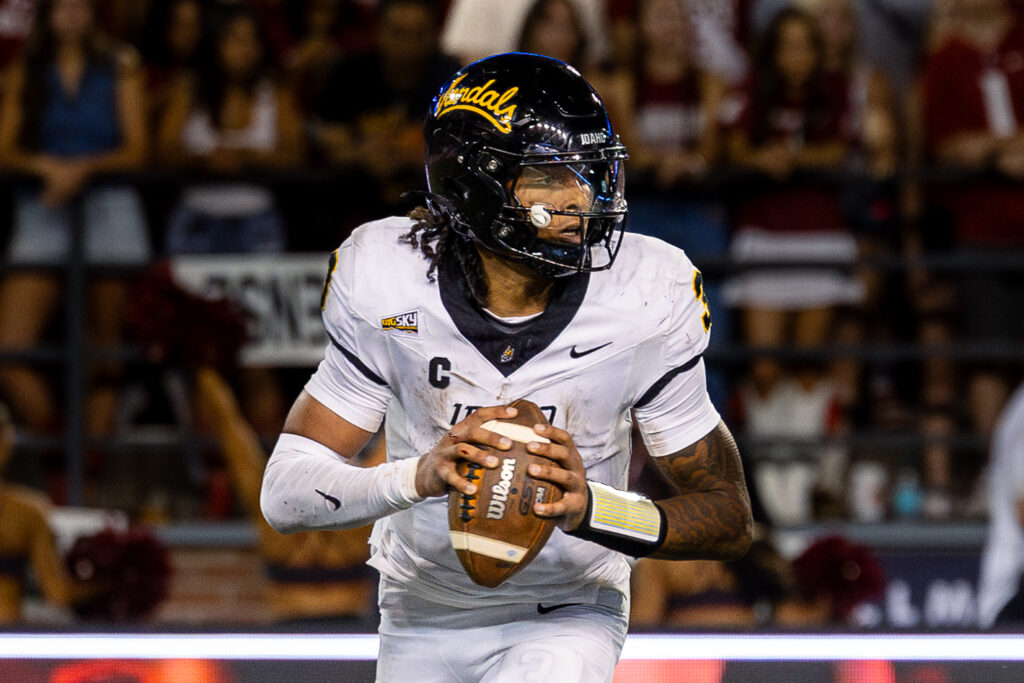
The skill positions also return a mix of production and potential. Ryan Jezioro, the team’s leading receiver as a freshman, is back after a redshirt season, while Marquawn McCraney, Tony Harste and Trais Higgins give Idaho a group of pass-catchers with experience in game situations.
For an offense that showed flashes but rarely operated at full strength last season, spring will be about finding rhythm and establishing identity under a new play-caller.
Defensively, Idaho enters the spring with a stronger foundation than it did a year ago, returning key contributors at all three levels of a unit that graded among the best in the Big Sky against the run.
Mitch Jaskowiak and Titus Ringor headline the defensive front, while linebacker Cruz Hepburn returns after a 71-tackle season that established him as a leader in the middle of the defense. In the secondary, Tim Jackson, Zach Wusstig and Hysan Dalton provide experience in a group that saw significant action in 2025.
“I’m also fired up to see our new guys on the defensive side of the ball get after it with pads on,” Ford said. “We’ve had a great start to the 26 season and [I’m] looking forward to seeing our guys improve their consistency, and master the fundamentals of their position.”
That emphasis on consistency reflects one of the biggest areas of focus for Idaho this spring. The Vandals were competitive in multiple games last season but struggled to close, particularly in one-possession contests. Turning experience into execution will be a central theme over the next five weeks.
The defensive unit will also be adjusting to a new voice. First-year defensive coordinator Lee Stalker arrives after three seasons at Iowa State, where he helped develop multiple all-conference players. His system will be one of the key storylines to watch throughout spring practices.

Special teams will see a similar transition under coordinator Joe Begnal, who inherits a group with returning experience in kickers Owen Forsman and Cameron Pope, as well as long snapper Dylan Fischer.
With all three phases of the game featuring new leadership, spring offers the first opportunity to evaluate how those changes translate on the field.
Beyond scheme and personnel, the most significant difference for Idaho may simply be time. A year ago, the Vandals were assembling a roster and learning a system simultaneously. Now, they return with a full offseason in place, a highly ranked recruiting class added to the mix and a clearer understanding of the program’s expectations.
For Ford, the goal is straightforward — build on the foundation established last season and move closer to the standard the program expects.