Despite legislators’ claims that Idaho’s K-12 public schools will remain untouched unaffected by additional budget cuts, it doesn’t mean higher education and the programs that assist K-12 students will have the same immunity.
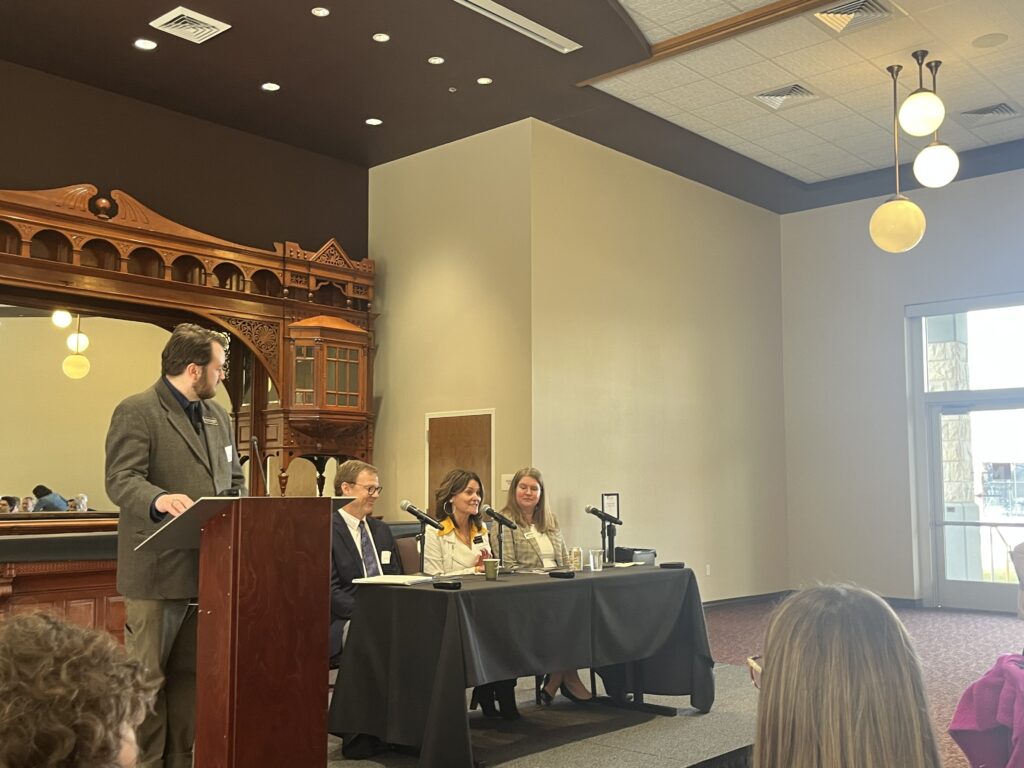
On March 3, the City Club of Boise, a local nonpartisan nonprofit aiming to promote community conversations, hosted a panel to discuss the uncertainties universities, colleges and K-12 schools are facing during current state budgetary shortfalls.
Panelists included David Douglass, president of the College of Idaho; Chandra Zenner Ford, center executive officer of the Boise and Southwest Idaho campuses of the University of Idaho; and Wendi Secrist, executive director of Idaho’s Workforce Development Council.
The Joint Finance-Appropriations Committee approved a total cut of $20 million from Idaho’s LAUNCH program, which provides grants of up to 80% of tuition cost to help state residents pursue higher education. It was decided that $10 million would be transferred from the 2026 fiscal year and an additional $10 million reduction would be placed in the next fiscal year’s budget.
Secrist said she recognizes the funding LAUNCH previously received was start-up funding to help expand the program, and clarified that the funding they received exceeded expenditures.
“We were able to take the money that reverted to us after the class of 2024, their first semester, plus these operational savings and offer back $10 million back to the state.” Secrist said.
The original motion was to take $10 million from LAUNCH’s budget as a one-time reduction, but the second $10 million from fiscal year 2027 wasn’t expected and will likely make a noticeable impact on the program, Secrist said.

“The $10 million cut translates into about 1,250 students that we may not be able to offer grants to,” Secrist said.
College of Idaho, a private institution, doesn’t rely on state funding, but Douglass denies that it doesn’t affect their college.
“We all operate in the same environment, in the sense that the go-on rate affects all of us,” Douglass said.
Douglass has concerns that cuts to LAUNCH will cause the go-on rate, the rate at which high school graduates go straight to college, to decrease.
An increase in Idaho’s go-on rate is necessary to fill the projected 103,000 jobs that will be added to Idaho’s workforce annually over the next 10 years, according to Secrist, and she says about 66% of those jobs will require some form of secondary education.
A shortage of people entering the workforce may also be a factor.
Secrist said the fact that shocked her was that there are 25% less individuals between the ages of 0-4 than there are individuals ages 14-18. This means there will likely be 25% fewer people entering the workforce once these individuals reach adulthood, not accounting for any individuals moving in or out of state.
Douglass also addressed concerns that the value of higher education was no longer worth it.
“The value of higher ed remains completely intact,” he said.
Douglass said the average earnings for a college graduate are still higher than those without a degree; they receive social goods, and their chances of unemployment are lower.
Whatever else people may think might increase quality of life in an area, “the single most productive factor you could come up with would be to increase the fraction of college education,” Douglass said.
Idaho’s public higher education institutions already faced a 3% cut this year and next, and now face additional cuts of 1% for Fiscal Year 2026 and a 2% cut for Fiscal Year 2027. State lawmakers are debating those bills.
Sen. Janie Ward-Engleking, D-Boise, proposed a motion in the Joint Finance-Appropriations Committee on March 3 to restore $7.3 million to higher education to combat some of the cuts, but the motion failed.
“This time I think there’s going to be real consequences in our ability to supply the talent the workforce needs,” said Zenner-Ford. Those consequences are going to be seen in recruiting and retaining staff as Idaho universities are no longer able to offer competitive salaries with neighboring state schools.
Immigration enforcement was also discussed, and the panelists were asked how the current climate surrounding immigration has affected the enrollment of foreign students.
Zenner-Ford said enrollment of foreign students has dropped significantly. The Argonaut reported a 15% drop at UI.
Douglass has seen similar results at the College of Idaho.
“We have students who are perceiving this is no longer a welcome environment for them to study,” he said.
When asked for final statements, Zenner-Ford said, “How do we help shape the future of our state? That requires investment.”
Secrist agreed with Zenner-Ford, saying, “At every level, we need investment in the state.”
Secrist expressed gratitude to legislators who are working and fighting the battle to restore funding back to education. Despite the losses of funding, Secrist said, “We should all be proud that the state of Idaho has affordable, accessible education at all levels.”
Lauren Tidwell can be reached at [email protected].