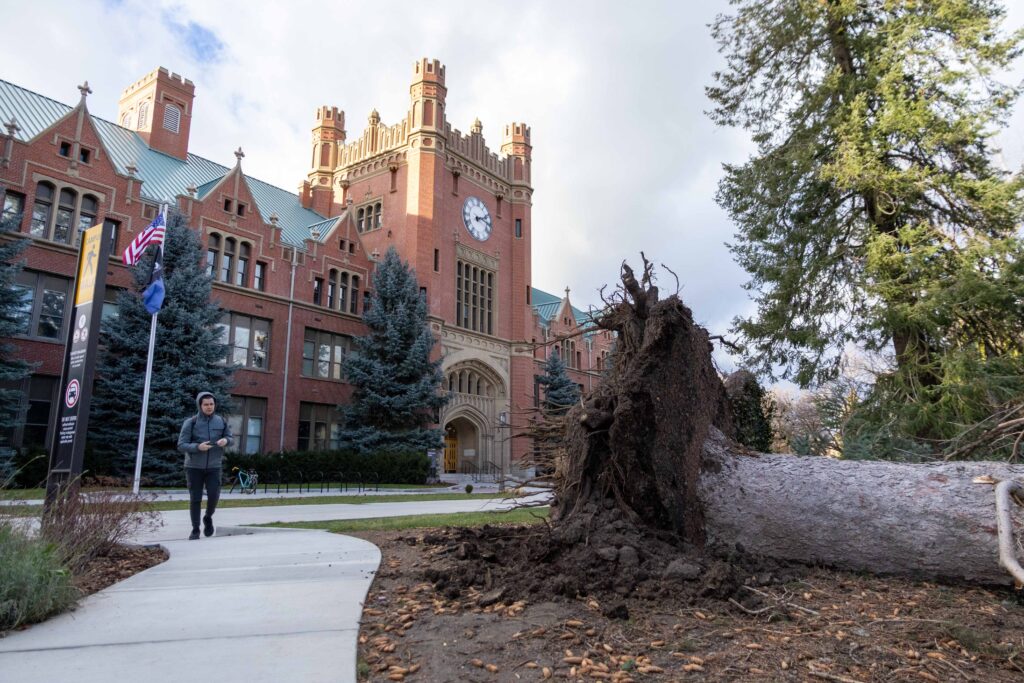
On Dec. 17, a monumental windstorm swept through North Idaho and Eastern Washington, downing and damaging trees across the region. Since then, the University of Idaho-led Franklin H. Pitkin Forest Nursery has been working to restore the areas that were damaged on campus and in Moscow.
Amongst many of the fallen trees across the city were two distinctly significant ones to the campus community. The Presidential Grove, located on Hello Walk, lost the Colorado Blue Spruce planted by Theordore Roosevelt in 1911, and Port Orford Cedar planted by William Howard Taft later that same year.
After the storm dissipated, members of the Pitkin Nursery team were first on the scene, including nursery director and associate professor of forest regeneration, Andrew Nelson, and director of the Inland Empire tree improvement cooperative, Marc Rust. The nursery team immediately took on the role of preserving the trees that were downed, particularly the presidential ones, where they began the delicate process of tree regeneration called grafting.
“[Rust] takes the seedlings I planted, he lops off the top of them, and then he splits the stem down vertically. He then takes the material from the Taft tree and he jams it in the center. He wraps it really tight and it sits there for a couple months, and hopefully they fuse together into the same tree,” Nelson explained.

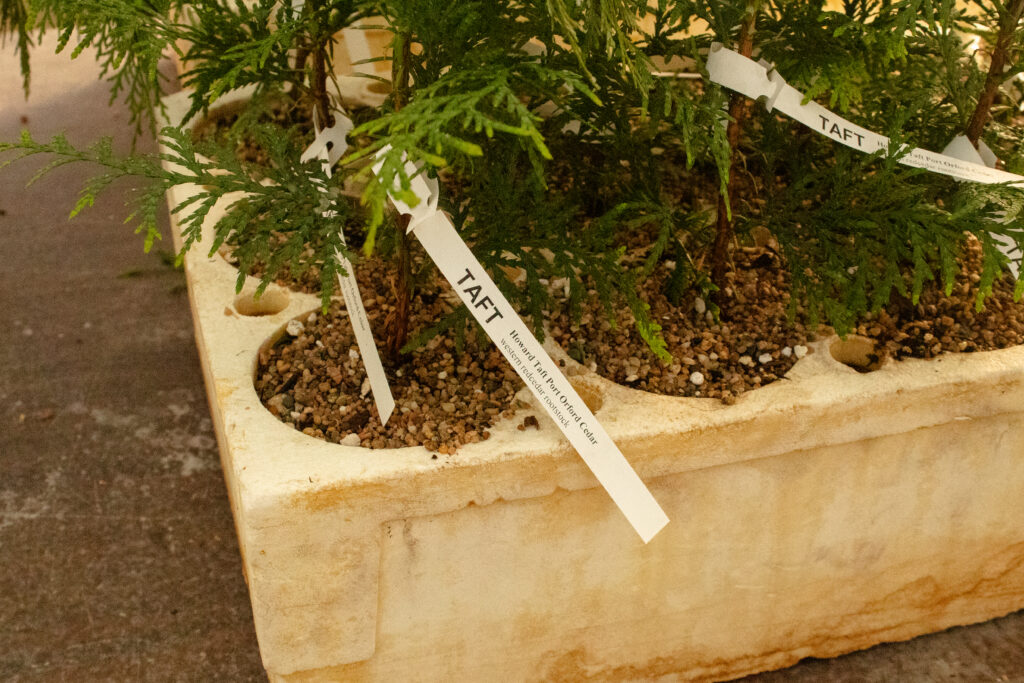
The process takes months to generate results during which the grafting trees require a specific environment in which to thrive in. Dozens of rows of grafted trees are currently arranged in the greenhouse and, carefully tended to by staff and students.
Though small stems now – some only a foot tall – they will one day be strong enough to be planted outside.
Nelson said the team is most actively focused on the replication and preservation of the Roosevelt and Taft trees, which they hope to plant back in the Presidential Grove this upcoming spring.
Though it’ll be years before the specimens reach full maturity, the director is confident the work being done by the nursery today will help to support trees that live on for generations.
“It’s still helping to preserve that legacy for the university and for all the emotional connection that alumni have to the institution,” Nelson said.
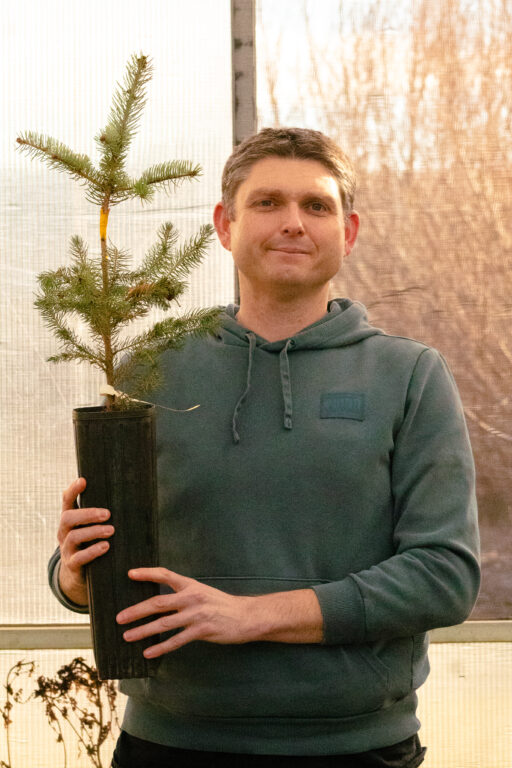
Located on Parker Farm just off Highway 8, Pitkin Nursery has a rich history of forestry and conservation efforts. The nursery is part of UI Center for Forest Nursery and Seedling Research and produces nearly 500,000 seedlings annually, including over 70 species of conifers, hardwoods and shrubs. The nursery also engages in statewide outreach and research efforts year-round.
“We put a very strong emphasis on teaching and research and outreach to help fulfill the university’s land grant mission to give back to the citizens of Idaho, to train the next generation of people working in the nursery industry and conduct cutting edge research to help local nurseries grow better quality seedlings,” Nelson said.
On top of the work they do within the university, Nelson explained several other outlets and organizations the nursery engages with, such as K-12 programs, local conservation groups and the Moscow Tree Commission.
Each year in partnership with the Idaho Forest Product Commission, 20,000 seedlings are donated for Arbor Day. Those budding trees are then given out for free across the state to promote the holiday.
Beginning in 1909 with Charles Shattuck, the program has run continuously, yet has only seen five directors. The longest standing leader for whom the nursery is named after, Frank Pitkin, maintained it for 50 years from 1929 to 1979.
Paige Wilton can be reached at [email protected].