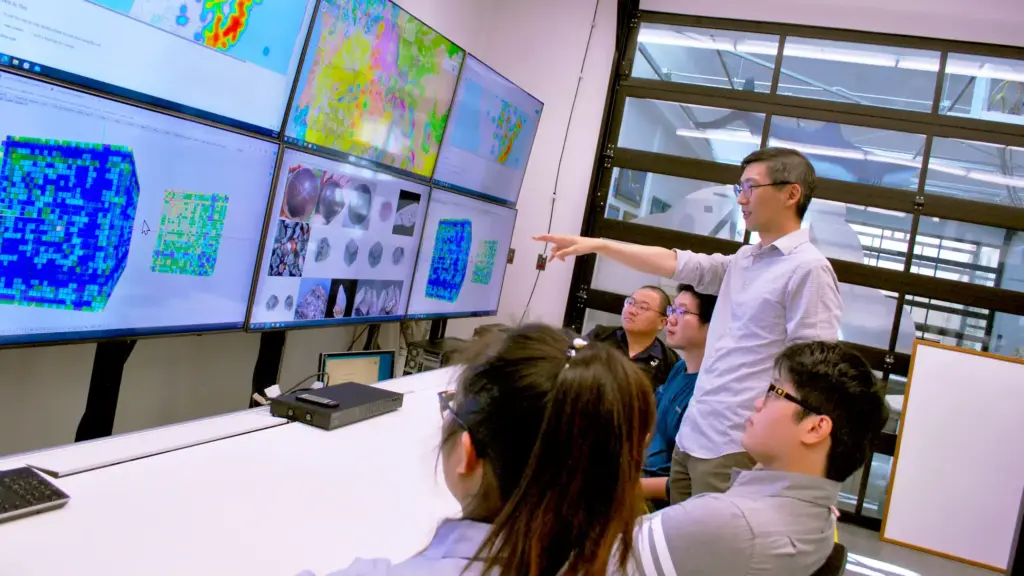
OneMineralogy, a University of Idaho-led project, received a $1.25 million grant from the National Science Foundation. The grants aims to improve mineral data system construction and visibility, create opportunities for students and support Idaho’s mining economy and workforce.
“I would call it a cross-disciplinary research project… and we’re in the forefront of research. We have AI. We have data science. And then we have mining, mineral exploration. So, it has both research topics and educational outreach activities,” said project lead and UI professor Xiaogang Ma from the UI College of Engineering.
Ma leads the project with researchers from Rutgers, the State University of New Jersey and the Carnegie Institution for Science.
It is estimated that more than 50% of the mining workforce will retire by 2029, with the industry already experiencing significant workforce availability problems. The Society of Mining, Metallurgical and Exploration said that the United States does not have the skilled labor or educational base to meet the current resource demand.

Earlier this year, UI created a new geological engineering degree, a collaboration between the College of Science and College of Engineering. The degree program also partners with North Idaho College and Idaho’s mining industries to prepare students for careers in the mining industry. The curriculum includes mining, mineralogy, geology, mineral exploration and potentially AI and data science integration.
The OneMineralogy data resources provide support to these educational programs and the project offers training workshops for students and educators, internships and hands-on work with real mineral data. For graduate students and postdoctoral students, paid research internships are available.
“We welcome any interested students, either undergraduate students or graduate students, to reach out to us if they’re interested either for research opportunities or they just want to have some fun with the Lego sets,” said Ma.
The NSF grant is one of several installments made over the past three years to enhance Mindat, the world’s largest mineral database for 25 years, which provides detailed information on mineral species, their properties and locations worldwide. From July 2023 to June 2024, the website had about 50 million page views from over 9.8 million visitors around the world.
OneMineralogy will build on Mindat and use an intelligent open data platform to organize mineral data. From this, the project will set out to create easy-to-use tools for researchers and strengthen open data efforts.
Idaho is home to several major mining districts, including the Coeur d’Alene District in northern Idaho, known for silver, lead and zinc; the southeastern Idaho Phosphate Reserve, which produces phosphate; the Stibnite District, known for gold, tungsten and antimony; and the Boise Basin, a historic gold-mining region.
By partnering with the Idaho Mining Association and Idaho Geological Survey, OneMineralogy will support mineral exploration and mapping across Idaho.
Scarlet Herway can be reached at [email protected].