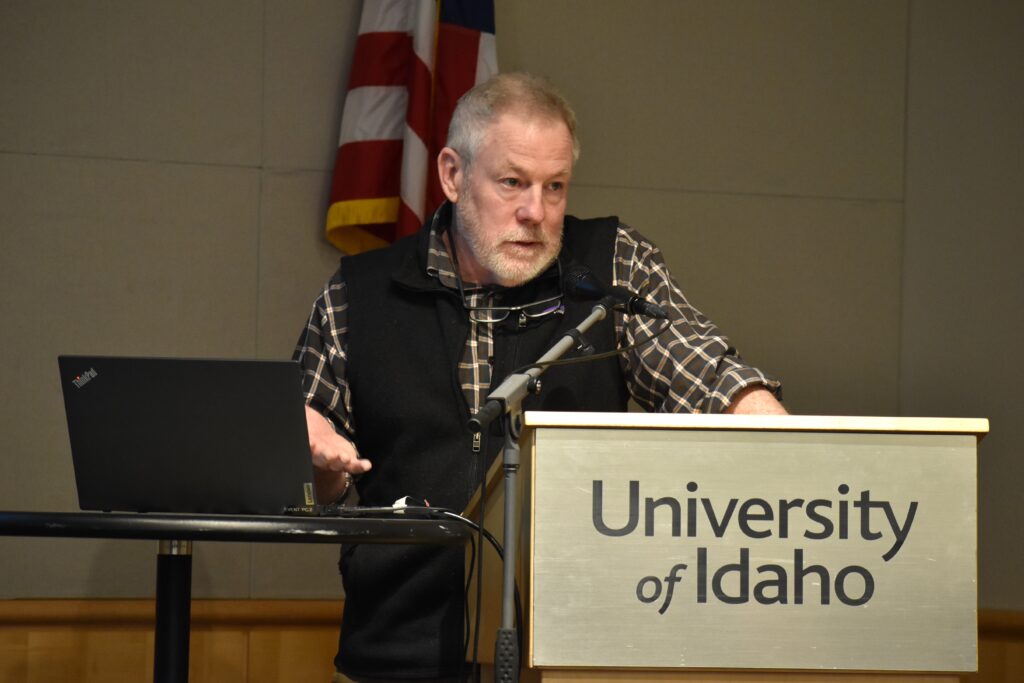
Local communities are drawing more water than the Palouse Basin Aquifer can naturally replenish, causing decades of measurable decline, according to Mike Faupel, executive director of the Palouse Basin Aquifer Committee. On the inaugural GIS Day held on Nov. 19, an annual event exploring geographical information systems the University of Idaho invited speakers and organizations to share their research and raise awareness about geographical data and issues such as the Palouse Basin groundwater crisis.
“We’re using more water than we receive every year,” Faupel said about the situation beneath Latah and Whitman counties.
PBAC monitors groundwater levels and annual water usage and is exploring implementing supplemental water sources. Faupel spoke about the Passive Aquifer Recharge program, which aims to determine the best areas on the Palouse Basin Aquifer for passive aquifer recharge, a method of replenishing groundwater from rainfall and surface water seepage.
The PBAC has funded programs through UI to find these prime areas and promote collaboration between researchers and landowners to collect well-water samples and identify where new water is entering the system.
Faupel said he works with cities, counties and universities to ensure a long-term, quality water supply for the Palouse Basin region, which is the sole source of drinking water across Latah and Whitman counties.
“We think that there will need to be a combination of solutions — passive aquifer recharge, conservation, more conservation, more conservation and then, as a last resort, which we think will be necessary, would be importing supplemental water supply,” Faupel said.
The imported water would come from the Clearwater River near Lewiston. The transport would require a 1,300-foot elevation gain between the river and aquifer, which would be difficult, expensive and have the potential for system failure. Faupel said there would also be challenges with contaminants from mixing river water with clean aquifer water.

Despite these challenges, he emphasized that public awareness matters and that conservation is cheaper than importation.
“If people understand the need for water conservation, they’re going to be more likely to conserve it,” Faupel said.
Despite growing populations in both Pullman and Moscow, water use has remained constant. Faupel ended by saying local action now could protect the Palouse Basin’s drinking water for years to come.
Sam Walsh can be reached at [email protected].