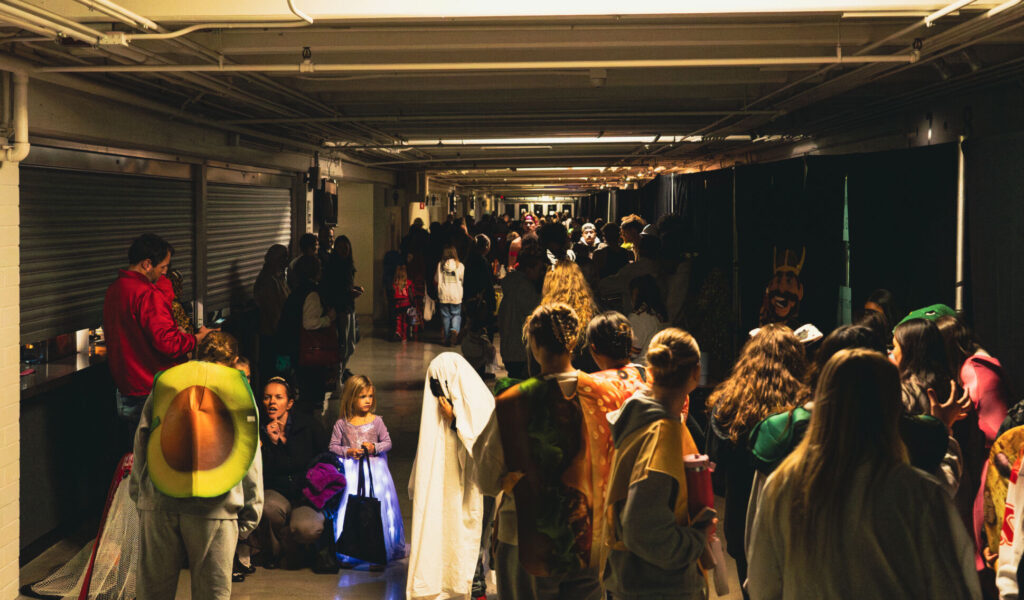
Once a night of harmless spooks, community gatherings and silly disguises, Halloween has, in recent years, morphed into a troubling display of costumes that use real weapons, simulated violence and insensitive tropes. What began as dressing up for fun has become an offense to common decency and social responsibility.
When costumes include knives, replica guns or other weapons, they walk on a fine line between playful and gratuitously provocative. A costume with a large plastic dagger might seem harmless, but in the wrong context it signals something darker: aggression, intimidation and a breakdown of boundaries that ought to separate fantasy from real-life threat. In an era when mass shootings, street violence and school lockdowns are grim facts of life, dressing up in a way that’s essentially glorifying weapons strikes many as tone-deaf at best and deeply offensive at worst.
Weapons in costumes also raise issues with responsibility. Halloween is a time when children and families come together. If a costumed person shows up with a fake gun or knife, one can’t help but worry how children perceive that accessory. Are they learning that violence is just another prop? Is that threatening appearance acceptable as long as it’s “just for fun?” In a world where real weapons do real damage, a culture of weaponized dress-up feels irresponsible, even when the intention is comedic or theatrical.
Compounding the issue is the way certain costumes play into harmful stereotypes. Some Halloween outfits lean on caricatures: hyper-violent gang member, masked terrorist, “crazy” killer clown with a machete, all of which reinforce stigmas rather than dismantle them.
These costumes exploit fear and present identities tied to violence or criminality as humorous or ironic. But the underlying message is still, “It’s funny to look like a threat.” That’s problematic because it normalizes associations between appearance and danger, between certain “look” and violence often at the expense of historically marginalized communities.
Moreover, Halloween’s transformation into a “scary costume battle” amplifies the offensiveness. Costumes featuring knives, axes, chainsaws or other violent implements often escalate each year; one-upmanship becomes the rule. What started with a ghost sheet becomes a zombie with a chainsaw, then a wounded cop with a gun, then some kind of masked executioner.
This arms-race mentality turns Halloween into a display of aggression, rather than imagination or whimsy. The experience for many children and guests becomes less about candy and laughter and more about shock value, fear and unease.
One must ask: where is the line between creative horror and inappropriate weaponization? It’s one thing to dress as a classic horror character for the sake of homage or theatrical fun. It’s entirely another to walk into a neighborhood with a decorative machete, mock blood and a threatening stance, especially when the environment includes children, unsuspecting neighbors and people of varied sensitivities. Some may view the costume as harmless, but others will feel exposed or unsafe. The harm lies less in the intention than in the impact.
It’s not just about the weapons themselves, but about what they signify. A plastic knife isn’t neutral when placed in a context of crime-drama impersonation or gang iconography. The symbolism of the weapon carries weight.
If a costume reinforces the idea that violence is okay, or that walking around looking like a thug with a blade is acceptable, then the costume crosses a line.
For many people, particularly victims of violence or communities impacted by it, such imagery is offensive, disrespectful and even traumatizing.
Another layer of concern is the setting. Halloween often includes public trick-or-treat routes, community events and shared spaces. At these gatherings, the presence of individuals in costumes with weapons or weapon-like props can complicate safety and threat of perceptions.
Neighbors may dread the whole idea of trick-or-treating when someone shows up in intimidating gear. What’s fun for one may feel like harassment to another. The neighborhoods’ trick-or-treating vibe should be about community, not about fear.
That’s not to say there’s no place for scary costumes or horror themes. But there is a difference between dressing in the role of a fictional slasher-movie monster and wearing a costume that appears to condone or replicate real-world violence. A mask and fake mask with theatrical blood are one thing; a plastic firearm, combat boots and urban gang mask is another. The former speaks of fantasy; the latter taps into social anxieties.
What could be done? Costume-makers, event organizers and homeowners should think twice before endorsing or tolerating outfitting children or adults with weapon-like accessories. Parents should ask: “Is this going to scare neighbors, kids or people who’ve experienced trauma?”
Community Halloween events should perhaps enforce rules around weapons-like props. Schools and neighborhood associations could encourage creativity over shock value steering children toward costumes that evoke fun, fantasy or ingenuity rather than aggression.
In the end, dressing up should be about imagination, playfulness and community spirit, not intimidation, threat or desensitizing imagery of violence.
When Halloween costumes start to resemble mock warfare, the night stops being a communal celebration and becomes a performance of offense. If the costume messaging is “I threaten,” rather than “I play,” then it may be time to reconsider what we’re dressing up for.
AJ Pearman can be reached [email protected].