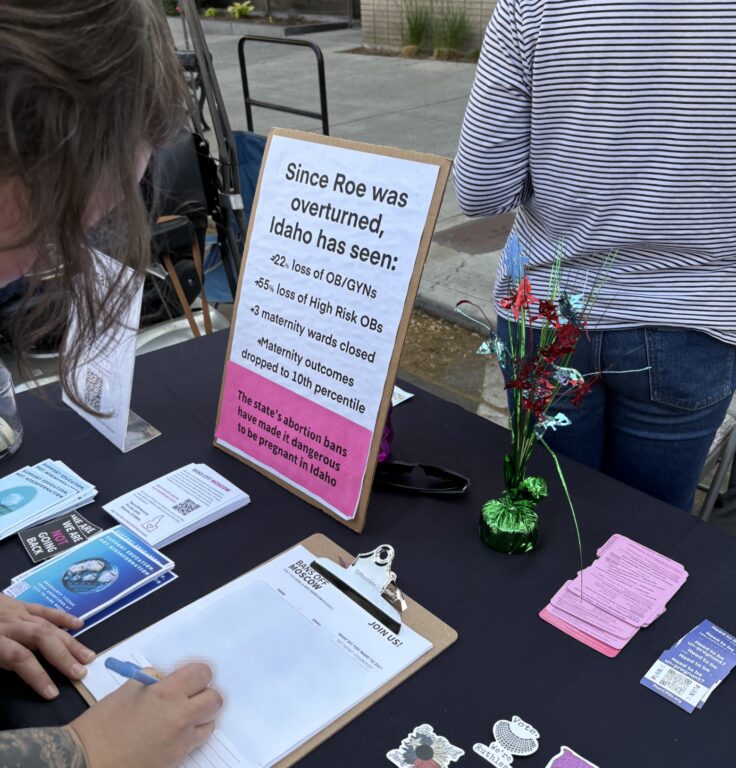
Roe v. Wade, the landmark case that protected abortion as a right to privacy under the 14th Amendment, was overturned on June 24, 2022, after almost 50 years of effect. Since then, 20 states have enacted restrictions or bans on abortion. Seven of these states have limitations beginning at 6-18 weeks of pregnancy. The other 13 have full bans, many without any exceptions for rape, incest or health impacts on the carrier.
After three years without Roe v. Wade, the harmful effects are starting to become more apparent. States with full bans have shown an increase in infant mortality. Texas, for example, had a 12.7% increase in infant deaths above expectations in the year following the ban, according to a study published by the Journal of the American Medical Association.
In Idaho, one of the worst effects has been a sharper drop in health care professionals. JAMA recently confirmed a steep decline of 35% in OB-GYNs practicing obstetrics in Idaho since August 2022.
“These findings are devastating but not surprising. They add to the growing evidence that current laws are driving doctors away and putting maternal health at risk,” Amber Nelson, Executive Director of the Idaho Coalition for Safe Healthcare, said in a press release. ICSH is a nonpartisan, clinician-led nonprofit working to ensure Idahoans have access to medical care free from political interference.
“Reduction in this workforce further threatens healthcare access, not just for women of reproductive age, but for all Idahoans,” Nelson said. “Idaho continues to lose safe, local care for all patients.”
“In my own community, we no longer have a dedicated OB-GYN. That means women in need of hysterectomies and other surgical procedures must travel hours and often wait months to get the care they should be able to get locally,” Caitlin Gustafson, M.D., a family medicine doctor located in McCall, said in the press release.
When people are not ready to have children and are forced to have them anyway, it can lead to a decreased quality of life for both the child and the families involved. The American Journal of Public Health found that those who are denied wanted abortions are below the poverty line, require government assistance and experience unemployment at a much higher rate than people who are able to receive a wanted abortion.
Ultimately, the bans are negatively impacting women and families throughout the country. By making people drive out of state for an abortion, it makes it much more expensive and time-consuming to receive one, leading to possible complications.
Months after the overturning of Roe v. Wade, Amber Nicole Thurman, a Georgian woman and mother, had to drive out of state to North Carolina for abortion care. She received an abortion pill, but it did not remove all the tissue, which led to a rare infection. Due to Georgia’s abortion ban, doctors waited 20 hours monitoring the infection, which led to her death. State investigators ruled it was preventable.
For those who can’t get out of state, restricting this aspect of health care leads to more health issues from unwanted pregnancies. Abortion bans are forcing people, including children, to carry their rapist’s child to term.
Despite all of the harm done, the bans and restrictions are not even delivering their intended goal to reduce the number of abortions within the U.S.
The Guttmacher Report found that the number of clinician-conducted abortions happening every year has increased in the U.S. since the overturning of Roe v. Wade. The number of abortions conducted at home by pill has also significantly increased.
Idaho itself has a full ban with exceptions for rape, incest and, as of April 14, medical conditions that could harm the woman’s health if they were to proceed without an abortion.
Even with exceptions for rape and incest, people are still required to file a report with the police or child protective services before they are able to receive an abortion, adding more steps to the process and potentially retraumatizing victims as they must recount their stories.
Under Donald Trump’s presidency, it is likely that abortion bans and restrictions will only become more prevalent. Three out of five of the justices who voted to overturn the case were nominated by Donald Trump and he has bragged about his contribution to it ever since. In an interview with CBS News, he said, “I wouldn’t have any regrets. I did something most people felt was undoable.”
As time continues to pass without Roe v. Wade, it becomes more important to acknowledge and bring attention to the harm that is caused without legal and safe abortions.
Hilary Valdez can be reached at [email protected].