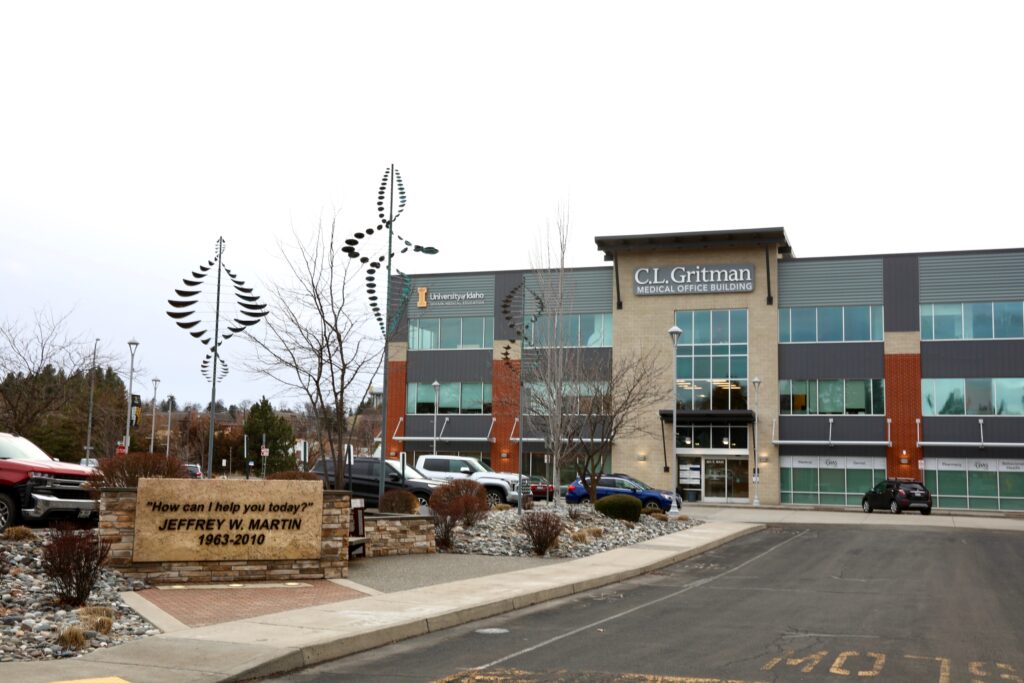
Should prospective Idaho medical students have cause for worry or celebration? Two house bills have been proposed this legislative session that affect medical education in Idaho. House Bill 176 and House Bill 368.
These two bills are very different in purpose. HB 176 proposes that Idaho reduce the number of seats reserved for students in the Washington, Wyoming, Idaho, Montana Alaska medical program after the 2026-27 academic year.
Part of the bill’s proposal is for the State of Idaho to cut funding to the WWAMI program after the 2026-27 school year for everybody except Idaho students already enrolled.
As a pre-med student, HB 176 is especially worrying to me. This bill had three readings on the Idaho House floor before it was sent to the Education Committee, where it has stalled.
Even though this bill has not been enacted, it shows that a significant portion of Idaho’s state government wants to divest from WWAMI. Since the bill does not propose a replacement for WWAMI, Idaho pre-med students would be left hanging in the wind.
The average cost of out-of-state medical school in the United States is $58,000 per academic year, totaling to $232,000 for all four years. Without an in-state option like WWAMI, many prospective medical students won’t be able to attend medical school.
That is why the ideas behind this bill should be cause for worry. The state of Idaho has been participating in the WWAMI program since 1971. What reason do the representatives who penned this bill have for getting rid of this program, a program that has been giving rural physicians to Idaho for so many years?
As of March 21, HB 368 has been passed by the House and sent to the Senate, where it went through committee and first reading and is currently awaiting second reading.
This bill shows support from our legislature for the college students who benefit from the WWAMI program.
Medical schools already extremely competitive acceptance rates and strenuous application processes, so divesting from WWAMI would cause more hardships on students pursuing those programs.
There should be support for increasing medical education in Idaho outside of the WWAMI program. This could be done by building medical programs within Idaho universities or by partnering with other medical school.
However, this should be an extension of WWAMI, not a replacement for it. By expanding the options available for students seeking careers in the medical field, we can increase the number of professionals trained each year, taking a step toward solving Idaho’s physician shortage.
Chris Sprague can be reached at [email protected].